
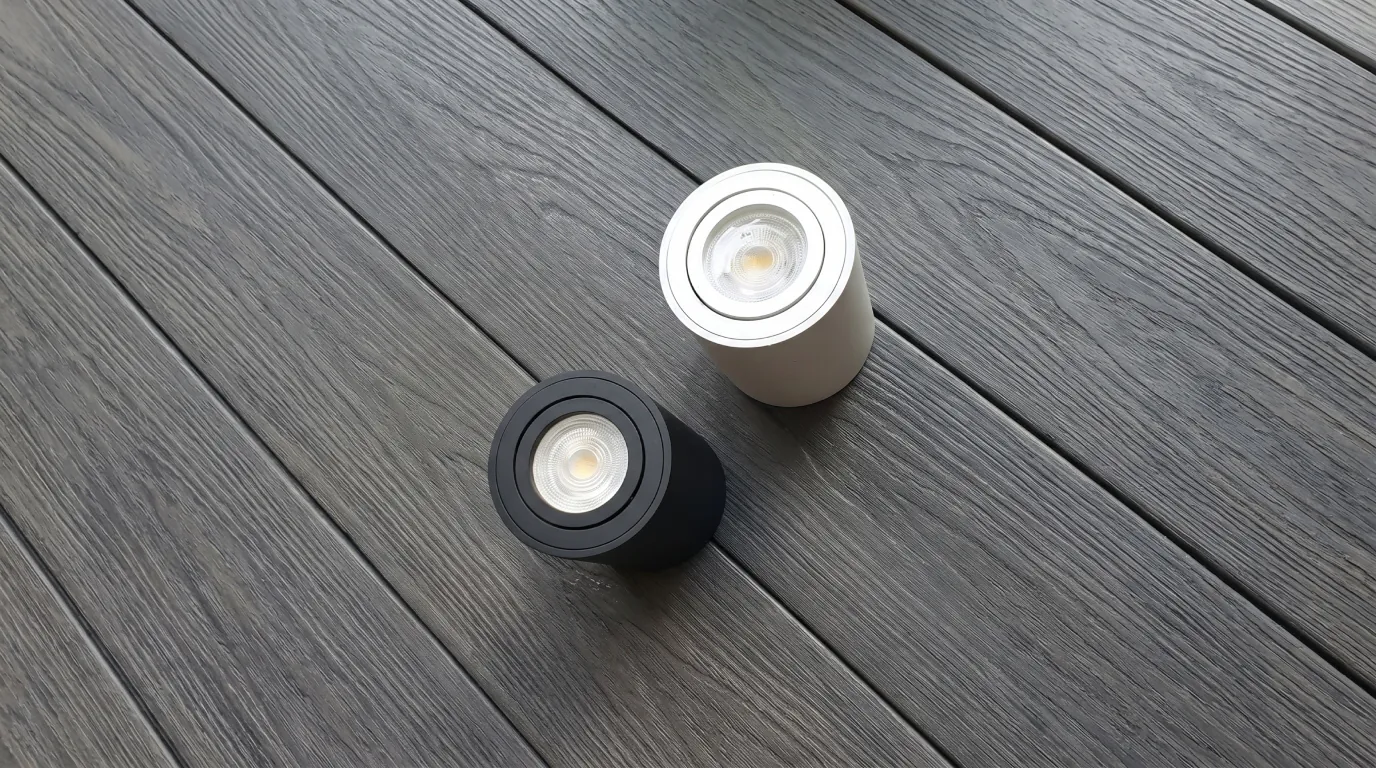
Ask most Singapore homeowners what lights they want in their new home and the answer is usually “downlights and some spotlights”, often without a clear idea of what each one actually does. The two fittings look similar from below, and both sit neatly in a false ceiling, but they solve different problems. Whether you are searching for a spotlight Singapore homeowners rely on or the right downlight Singapore homes need for everyday light, this guide explains how the two differ, which suits each room in an HDB flat or condo, and how to combine them so the room works from morning to night.
What a Downlight Does
A downlight is designed to provide general, even light. It sits in or on the ceiling and sends light downward in a broad spread, so the room is evenly lit and people can move around, cook, read or clean without dark patches. In most Singapore homes, downlights are the main source of light in living rooms, kitchens, corridors and bedrooms.
Because downlights do the everyday work, consistency matters more than drama. A good downlight layout uses fittings of the same size, colour temperature and brightness across a space, spaced so their light overlaps slightly. Homeowners who plan to buy downlight fittings for a whole flat often choose a single reliable range, such as a Megaman downlight range, so the light looks the same in every room.
What a Spotlight Does
A spotlight does the opposite job. Instead of spreading light evenly, it directs a focused beam onto a specific area or object, such as a feature wall, artwork, a display shelf or a kitchen island. Many spotlights have adjustable heads, so the beam can be aimed precisely and re-aimed later if furniture moves.
Spotlights create contrast, which makes a room feel layered, but it also means they are rarely a good choice as the only light source. A ceiling lit entirely by narrow spotlights tends to produce bright pools with dark gaps between them, plus glare for anyone sitting directly underneath.
Spotlights vs Downlights at a Glance
| Factor | Downlight | Spotlight |
| Main job | General, even light | Focused accent or task light |
| Beam | Wide spread | Narrow to medium, often adjustable |
| Best for | Overall room lighting | Feature walls, artwork, islands, shelves |
| Typical quantity | Several per room, evenly spaced | A few, placed with purpose |
| Risk if overused | Flat, uniform look | Glare, harsh shadows, busy ceiling |
Which One Does Each Room Need?
Living Room
Use downlights for overall light, then add two or three spotlights for a feature wall, TV console wall or artwork. Keep spotlights away from the area directly above the sofa so no one looks straight into a beam while relaxing.
Kitchen
Downlights provide the general light. Over counters and islands, focused light helps with food preparation, so spotlights aimed at the work surface, or downlights positioned in front of where the cook stands, reduce shadows on the chopping board.
Bedroom
Bedrooms usually need gentle general light from a small number of downlights. Spotlights are optional and best reserved for a wardrobe front or a reading nook rather than the bed itself.
Corridors and Entrances
Downlights spaced evenly along a corridor make it safe and comfortable. A single spotlight can highlight entrance artwork.
Beam Angle, Colour Temperature and Brightness
Three specifications decide how either fitting performs. Beam angle describes how wide the light spreads. Spotlights typically use narrow beams of around 15° to 25° for accent and medium beams of around 30° to 40° for task areas, while downlights use wider beams for even coverage.
Colour temperature, measured in Kelvin, sets the mood. Warm white of around 2700K to 3000K suits living rooms and bedrooms, while neutral white of around 4000K suits kitchens and study areas. The key is to keep spotlights and downlights in the same space at the same colour temperature, so the room does not look patchy.
Brightness should be planned room by room rather than by simply adding more fittings. Lighting accounts for around 15% of an average home’s electricity use, according to the U.S. Department of Energy (n.d.), which also recommends dimmers and controls as an easy way to use less of it. Dimmable fittings are especially useful with spotlights, since accent lighting often looks best at lower levels in the evening.
Recessed or Surface-Mounted?
Both downlights and spotlights come in recessed versions, which sit inside a false ceiling, and surface-mounted versions, which attach directly to the ceiling. Recessed fittings look cleaner but need a false ceiling with enough depth and the correct cut-out size. Surface-mounted fittings suit homes without a false ceiling, or rooms where the existing ceiling cannot be cut. If the false ceiling is still being built, confirm the cut-out size of the chosen fittings with your contractor first, because changing it later means patching the ceiling.
For homes where layouts change often, track-based systems are another option, and we compare those in our guide to power track singapore Power Track vs Magnetic Track Lighting: Which Flexible System Suits Your Home? and magnetic track options.
Common Mistakes to Avoid
The most common mistake is using spotlights where downlights are needed, which leaves rooms with bright patches and dark corners. The second is placing beams directly above seating or beds, causing glare. Mixing colour temperatures between fittings in one room is another, as is spacing downlights too far apart so their light does not overlap. Finally, many homeowners forget that any new lighting point or rewiring is electrical installation work. The Energy Market Authority (n.d.) advises engaging a Licensed Electrical Worker for electrical works such as rewiring, so new light points should be planned with one from the start.
How to Plan Your Layout
Start with the general lighting: decide how many downlights each room needs for even coverage. Next, list the features or tasks that deserve focused light and add spotlights only for those. Then choose one colour temperature per space and confirm cut-out sizes before the false ceiling is closed. Seeing both fittings switched on side by side makes these choices much easier, and you can compare beam spreads and finishes across our spotlight singapore range before deciding.
Frequently Asked Questions
Can I use only spotlights in my living room?
You can, but it is rarely comfortable. Spotlights create focused pools of light, so using them alone tends to leave dark areas and cause glare. Pairing downlights for general light with a few spotlights for accent gives a more balanced result.
How many downlights does a typical HDB bedroom need?
It depends on the room size, ceiling height and the brightness of each fitting, but most bedrooms need only a small number of evenly spaced downlights. A lighting specialist can work out the layout from your floor plan.
Should spotlights and downlights be the same colour temperature?
Yes, within the same room. Matching colour temperatures keeps the light consistent, while mixing warm and cool white in one space can make it look patchy.
Can I add spotlights after my renovation is finished?
Yes, but recessed spotlights need new cut-outs and wiring. Surface-mounted or track-based options are easier to add later.
Who should install new downlights or spotlights?
New light points and any rewiring should be handled by a Licensed Electrical Worker, as this counts as electrical installation work in Singapore.
Get the Balance Right
Downlights and spotlights work best as a team: one lights the room, the other gives it character. Getting the balance right comes down to planning the general lighting first, adding accent light with purpose and keeping colour temperatures consistent. If you would like help planning your layout, visit our light shop Singapore showroom to see spot light Singapore options and downlights switched on side by side, and talk to our team about what suits each room.
References
- Energy Market Authority. (n.d.). Who should I engage to assist with my electrical works (e.g. rewiring of my house)? EMA. https://ema.gov.sg/resources/faqs/electricity/general-electricity-works/who-should-i-engage-to-assist-with-my-electrical-works-eg-rewiring-of-my-house
- U.S. Department of Energy. (n.d.). Lighting Choices to Save You Money. Energy Saver. https://www.energy.gov/energysaver/lighting-choices-save-you-money