
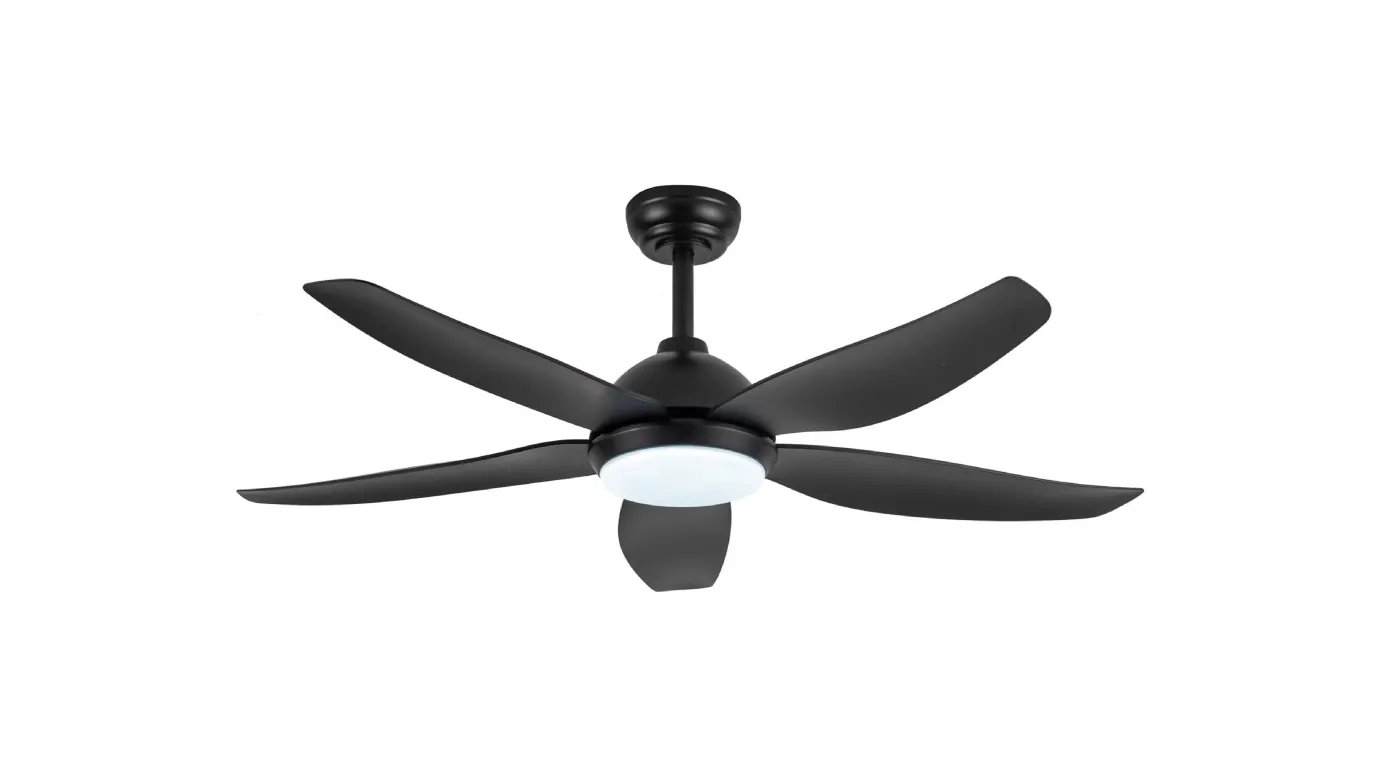
Walk through any ceiling fan showroom and one of the first things you notice is the variety of blade counts: sleek three-blade designs, balanced four-blade models and fuller five-blade fans. It is natural to assume that more blades means more air, and that a five-blade fan must be the stronger choice. In reality, blade count is only one part of the picture, and often not the most important one. This guide explains what blade count really changes, what matters more, and how to choose a 5 blades ceiling fan, or any other design, for each room in an HDB flat or condo. If you have been comparing every fan on ceiling displays and online listings, this will help narrow the choice.
What Blade Count Actually Changes
Airflow Feel
Blade count affects how the air feels rather than simply how much of it there is. Fewer blades can usually spin a little faster with less drag, which often gives a crisper, more noticeable breeze. More blades tend to move air in a smoother, gentler way, which many people find more comfortable for sleeping or long periods of sitting.
Noise and Balance
A well-made fan should be quiet whatever its blade count. Five-blade designs are often described as feeling steady because the load is spread across more blades, but motor quality, blade balance and correct installation have a much bigger effect on noise than the number of blades alone.
Looks
Blade count has a strong visual effect. Three-blade fans look minimal and modern, four-blade fans look balanced, and five-blade fans look fuller and more traditional. For many homeowners, this is the deciding factor once the practical requirements are met.
What Matters More Than Blade Count
Blade Span
Blade span, the diameter swept by the blades, is the single most important sizing decision. A fan that is too small for a room barely moves the air at the edges, while one that is too large can feel overpowering in a compact bedroom. As a general guide, smaller bedrooms suit spans of around 36 to 42 inches, while living rooms and larger spaces often suit 48 to 56 inches or more.
Motor Type
Motor type affects running cost and noise. Fans with DC motors are generally quieter and more efficient than AC models; the NSW Climate and Energy Action (n.d.) guidance notes that DC motor fans are quieter and around 70% more efficient than AC motor fans. DC fans also tend to offer more speed settings, which is useful for fine-tuning comfort through the day.
Mounting Height and Clearance
How far the blades sit below the ceiling affects airflow too. A guide from Pacific Northwest National Laboratory (n.d.) notes that circulation increases as blade-to-ceiling clearance increases. In rooms with low ceilings, a hugger or flush-mount fan keeps the blades a safe distance above head height, while taller ceilings allow a downrod that lowers the fan into the room for better airflow.
Speed Settings and Controls
Multiple speeds, a reverse function and remote or app control make a fan easier to live with. A fan that can run very slowly overnight and faster on a hot afternoon will be used more comfortably than one with only a few fixed speeds.
3-Blade vs 4-Blade vs 5-Blade at a Glance
| Blade count | Typical feel | Look | Best for |
| 3 blades | Crisp, noticeable breeze | Minimal, modern | Living rooms and modern interiors |
| 4 blades | Balanced | Clean, versatile | Most rooms, a safe all-round choice |
| 5 blades | Smooth, gentle airflow | Fuller, more traditional | Bedrooms and classic interiors |
Which Fan Suits Each Room?
Bedrooms
Comfort through the night is the priority, so a quiet motor and a low speed setting matter most. Many homeowners prefer the gentle feel of a four- or five-blade fan here, sized to the room so the breeze reaches the bed without being too strong.
Living Rooms
Living rooms need a larger blade span to cover seating areas. Here the look of the fan often carries more weight, so a three-blade design suits a modern interior, while a five-blade design suits a warmer, classic style.
Rooms With Low Ceilings
Many HDB rooms have limited ceiling height. A hugger mount matters far more than blade count in these spaces, since safety and clearance come first.
Fans With Lights
If the fan replaces the room’s main light, check the brightness and colour temperature of the light kit as carefully as the fan itself, so the room is well lit as well as cool.
Getting the Most From Any Ceiling Fan
Ceiling fans cool people rather than rooms, by creating a wind chill effect on the skin. The U.S. Department of Energy (n.d.) describes ceiling fans as the most effective type of circulating fan and advises running them counterclockwise in hot weather to create a cooling breeze. It also suggests checking noise ratings and, where possible, testing a fan before you buy, which is the best way to judge blade count, airflow and noise for yourself. Turning the fan off when you leave the room avoids wasting electricity. In Singapore’s warm, humid climate, a well-sized ceiling fan can also make rooms comfortable enough that air-conditioning is needed less often, especially in the mornings and evenings, which is one of the simplest ways to keep running costs down.
Common Mistakes When Choosing a Ceiling Fan
The most common mistake is choosing on blade count or looks alone, before checking the blade span suits the room. Others include picking a downrod fan for a low ceiling, buying an AC fan for a bedroom where quiet running matters, and forgetting about the light kit. Installation is the last trap: a fan needs a secure mounting point that can carry its weight and vibration, and any new wiring or ceiling point should be done by a Licensed Electrical Worker.
Frequently Asked Questions
Does a 5-blade ceiling fan move more air than a 3-blade fan?
Not necessarily. Airflow depends more on blade span, blade pitch, motor and speed than on blade count. Five blades often feel smoother, while three blades often feel crisper.
Are 5-blade fans quieter?
They can feel steadier, but noise depends mainly on motor quality, blade balance and installation. A well-made fan should be quiet with any blade count.
What size fan should I choose for an HDB bedroom?
Many bedrooms suit a blade span of around 36 to 42 inches, but check the room size and ceiling height. A specialist can confirm the right size from your room measurements.
Is a DC motor worth it?
For most homes, yes. DC motors are generally quieter and more efficient than AC motors, and often offer more speed settings.
Can I install a ceiling fan on a low ceiling?
Yes, using a hugger or flush-mount design that keeps the blades at a safe height. Avoid long downrods on low ceilings.
Find the Right Ceiling Fan
When choosing a ceiling fan Singapore buyers often focus on blade count first. Blade count shapes how a fan looks and how its breeze feels, but blade span, motor type and mounting matter more for comfort. Decide those first, then choose the blade count that suits your style. For more ideas on lighting the same room, read our guide on spot light Singapore Spotlights vs Downlights Singapore: Which One Does Your Room Actually Need? and downlight options. You can compare 3-, 4- and 5-blade designs in our range of ceiling fans, or visit our showroom, one of the light shops in Singapore where you can see fans running side by side before you decide.
References
- NSW Climate and Energy Action. (n.d.). Ceiling fans. NSW Government. https://www.energy.nsw.gov.au/households/upgrades/ceiling-fans
- Pacific Northwest National Laboratory. (n.d.). Ceiling Fans (ENERGY STAR). Building America Solution Center. https://basc.pnnl.gov/resource-guides/ceiling-fans-energy-star
- U.S. Department of Energy. (n.d.). Fans for Cooling. Energy Saver. https://www.energy.gov/energysaver/home-cooling-systems/fans-cooling