
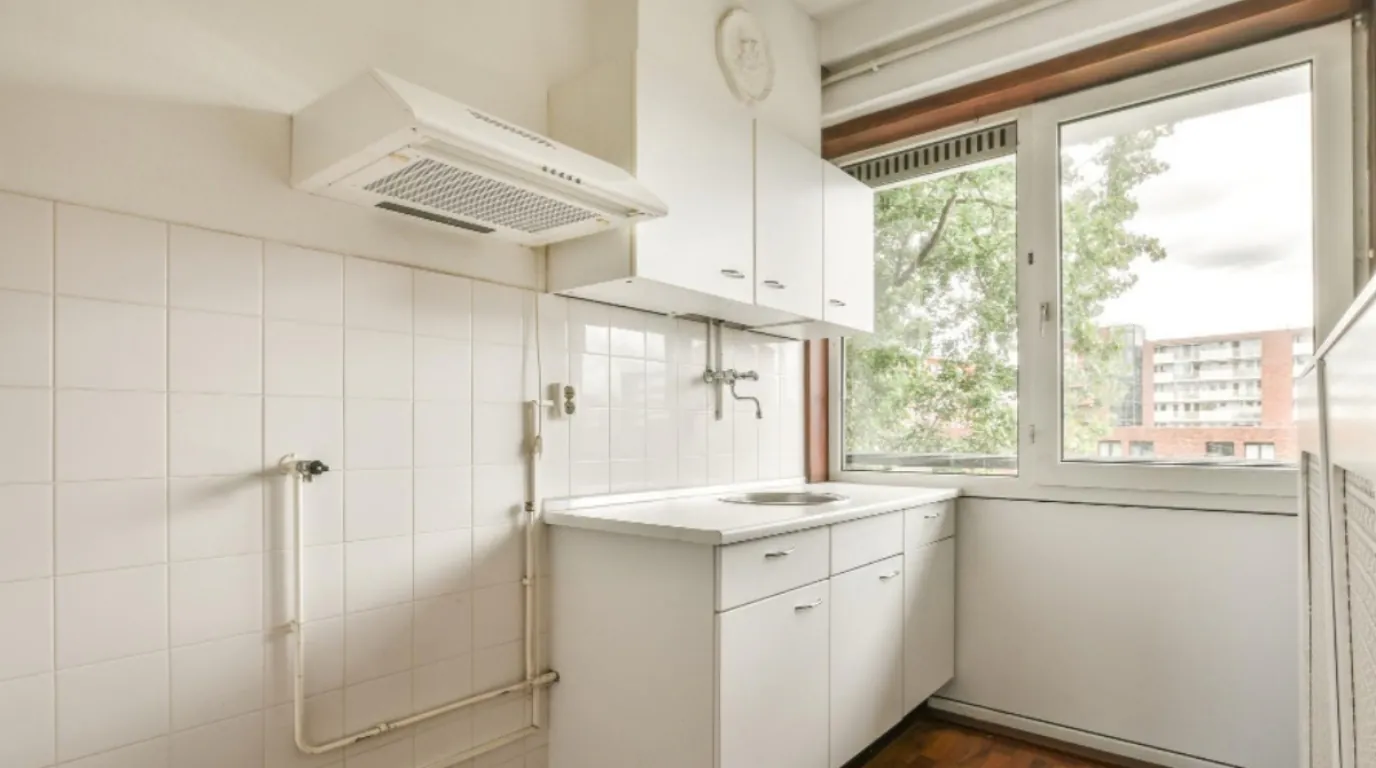
Small kitchens and balconies are some of the hardest spaces in a Singapore home to cool properly, mostly because there’s rarely enough ceiling clearance or floor space for a standard fan. A corner fan singapore homeowners choose for these tight spots solves a genuinely different problem than a living room ceiling fan does — it’s less about circulating air across a large room and more about creating usable airflow in a space where every centimetre of clearance is already accounted for.
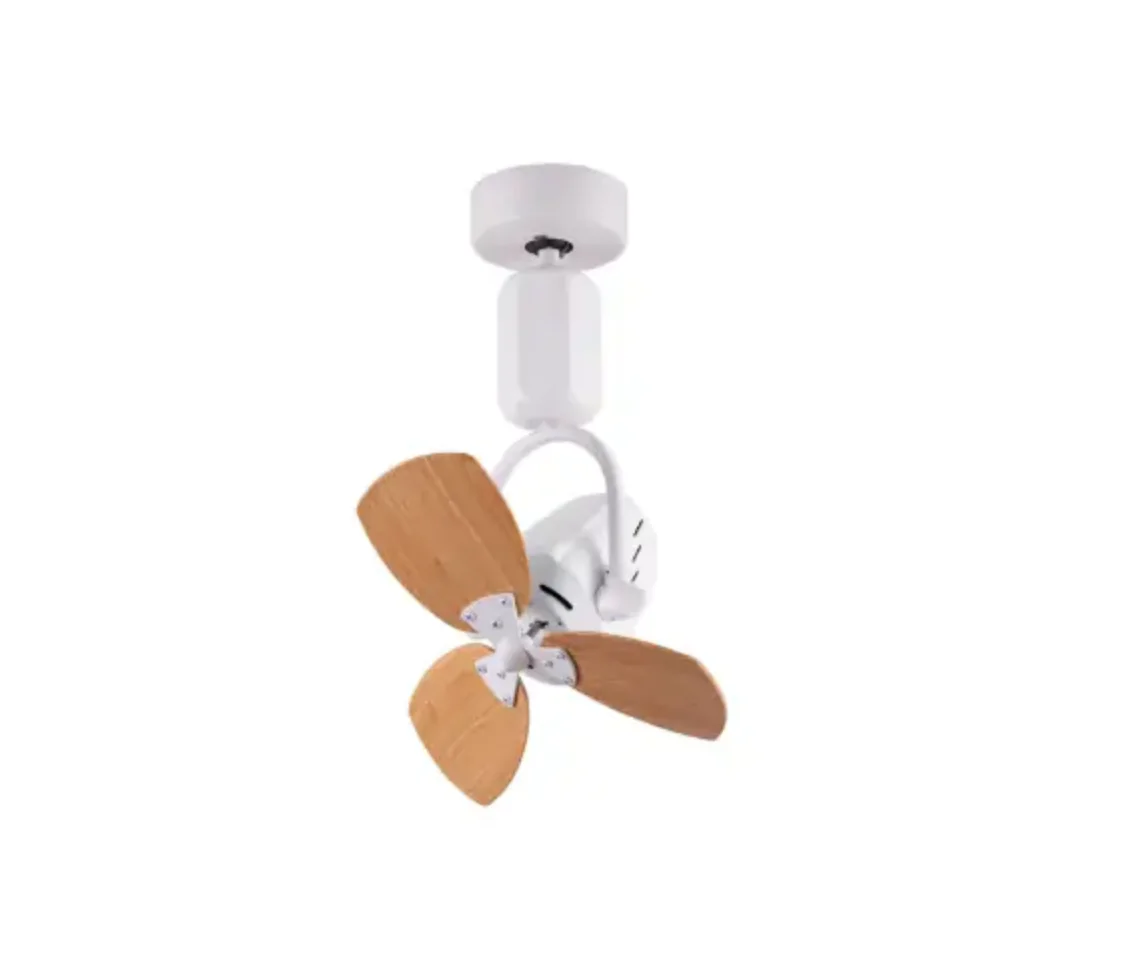
Why Corner and Wall-Mount Fans Suit Small Kitchens
Kitchens in HDB flats and smaller condo units are frequently the hottest room in the home, thanks to cooking heat, limited window openings, and ceilings often lower than the rest of the unit due to service ducts overhead. A standard ceiling fan needs blade clearance from walls and cabinets that most compact kitchens don’t have, which is why corner-mount and wall-mount fans have become the practical default for this space. Mounted diagonally across a corner or flush against a wall, they clear cabinet edges and extractor hoods that would otherwise make a ceiling fan installation impractical or unsafe.
Balconies present a related but distinct challenge: many are semi-outdoor, exposed to wind-driven rain, and have overhangs or laundry racks that rule out a hanging fixture. Wall-mount fans rated for outdoor or semi-outdoor use address this directly, since they’re built with more weather-resistant housings and mounting hardware than an indoor ceiling fan.
Oscillation Angles and Coverage
Most corner and wall-mount fans oscillate across roughly 60 to 90 degrees, considerably narrower than the 360-degree coverage of a ceiling fan, which is actually an advantage in a tight kitchen — it directs airflow toward the cooking or prep area specifically rather than dissipating it evenly across a space that includes cabinets and appliances that don’t need cooling. When comparing models, it’s worth checking the stated oscillation angle against the actual layout of the kitchen: a fan mounted in a corner facing the stove and adjacent counter typically needs no more than a 75-degree sweep to cover both areas effectively.
Noise Levels for Compact, Enclosed Areas
Noise matters more in a small kitchen than it does in an open living room, simply because sound reflects off hard surfaces like tiles, countertops, and cabinet doors with less soft furnishing to absorb it. DC motor corner fans generally run several decibels quieter than older AC motor models at equivalent airflow, which becomes noticeable in a compact, tiled kitchen where every appliance sound is amplified. For a space used daily for cooking and conversation, it’s worth prioritising a quieter DC motor model over one that simply moves more air, since a loud fan in an enclosed kitchen is more likely to end up switched off entirely.
Installation Clearance Requirements
Corner and wall-mount fans still require a manufacturer-specified minimum clearance from adjacent walls, cabinet edges, and the ceiling, typically in the range of 15 to 30cm depending on blade diameter — this isn’t optional, since inadequate clearance both reduces airflow efficiency and creates a safety hazard around moving blades in a space people move through constantly while cooking. It’s also worth checking clearance from any gas hob or open flame, since some fan models specify a minimum distance from heat sources for safety reasons that go beyond general installation guidelines.
As with any new wiring point for a wall or ceiling-mounted fan, connecting to an existing lighting circuit or adding a new switched point falls under electrical installation work in Singapore, which by law must be carried out by a Licensed Electrical Worker rather than a general handyman or renovation contractor (Energy Market Authority, n.d.). This matters particularly in kitchens, where dedicated circuits already carry loads from hoods, ovens, and other fixed appliances, and an improperly wired fan can trip breakers or, in worse cases, create a fire risk.
Corner Fans vs Standard Pedestal or Ceiling Fans for Small-Space Cooling
A pedestal fan is the obvious fallback for a small kitchen, but it occupies floor space that’s often at a premium in a compact HDB kitchen, and it’s an easy trip hazard when moving between the stove, sink, and counter. A corner or wall-mount fan solves this by keeping the entire footprint off the floor, which matters more in a working kitchen than in a bedroom or living room where a pedestal fan can simply be tucked into an unused corner.
Standard ceiling fans remain the better option where the room genuinely has the clearance for one — a spacious kitchen-dining combination area, for instance — but for the tightest galley kitchens and narrow service balconies common in newer HDB layouts, a corner or wall-mount fan is often the only fixture that physically fits without compromising on blade clearance from cabinets or overhead ducting.
This kind of small-space cooling has also become more relevant as Singapore’s average temperatures continue to trend upward; the National Environment Agency and Ministry of Sustainability and the Environment jointly launched a heat stress advisory in response to Singapore recording some of its warmest years on record, encouraging households to think proactively about cooling in spaces where air-conditioning isn’t practical or is deliberately avoided for cost reasons (Ministry of Sustainability and the Environment, 2023). A kitchen running a stove for an hour on a warm afternoon is exactly the kind of scenario that advisory has in mind.
Which Fan Fits My Kitchen Layout? A Quick Checklist
Before choosing a model, it helps to walk through a short checklist: measure the available corner or wall space and compare it against the fan’s mounting footprint; confirm oscillation angle covers both the stove and counter if both need airflow; check the manufacturer’s minimum clearance from any gas hob; and decide whether outdoor-rated weatherproofing is needed for a semi-exposed balcony versus a fully enclosed kitchen. Skipping any of these steps is usually what leads to a fan that technically fits but doesn’t actually solve the airflow problem it was bought for.
Frequently Asked Questions
Can a corner fan replace a ceiling fan in a small kitchen?
For kitchens too small for a ceiling fan’s required blade clearance, yes — a corner or wall-mount fan is usually the more practical choice, since it clears cabinets and hoods that a ceiling fan cannot.
Are wall-mount fans safe for balconies exposed to rain?
Only models specifically rated for outdoor or semi-outdoor use should be installed on an exposed balcony. Check the manufacturer’s weatherproofing rating before purchase rather than assuming any wall-mount fan is suitable.
How much clearance does a corner fan need from my gas hob?
This varies by model, but manufacturers typically specify a minimum safe distance from open flames and heat sources. Always check the specific product’s installation manual rather than relying on general clearance guidelines.
Do I need an electrician to install a corner or wall-mount fan?
Yes, if it requires a new or altered wiring point. This is a legal requirement in Singapore for any fixed electrical installation, not just a safety recommendation.
Is a DC motor corner fan worth the extra cost over an AC model?
For a compact, enclosed kitchen where noise is more noticeable, a DC motor’s quieter operation and lower energy use generally justify the higher upfront cost, especially for a fan that will run for extended periods during cooking.
Choosing the right fan for a small kitchen or balcony comes down to matching clearance, oscillation coverage, and noise level to the specific constraints of the space, rather than assuming a standard fan will simply work in a non-standard layout. If you’re also planning the room’s lighting Kitchen Lighting Singapore — Layering Task, Ambient & Accent Light for HDB and Condo Kitchens, covers a similar planning approach for the same space. Visit the Regal Lighting showroom to see corner and wall-mount fan models running live, and get advice on which configuration actually fits your kitchen’s dimensions before you buy.
References
- Ministry of Sustainability and the Environment. (2023). New Heat Stress Advisory Launched To Guide Public On Minimising Risk Of Heat-Related Illnesses. MSE. https://mse.gov.sg/latest-news/press-release-heat-stress-advisory
- Energy Market Authority. (2026). Who Should I Engage To Assist With My Electrical Works? EMA. https://ema.gov.sg/resources/faqs/electricity/general-electricity-works/who-should-i-engage-to-assist-with-my-electrical-works-eg-rewiring-of-my-house