
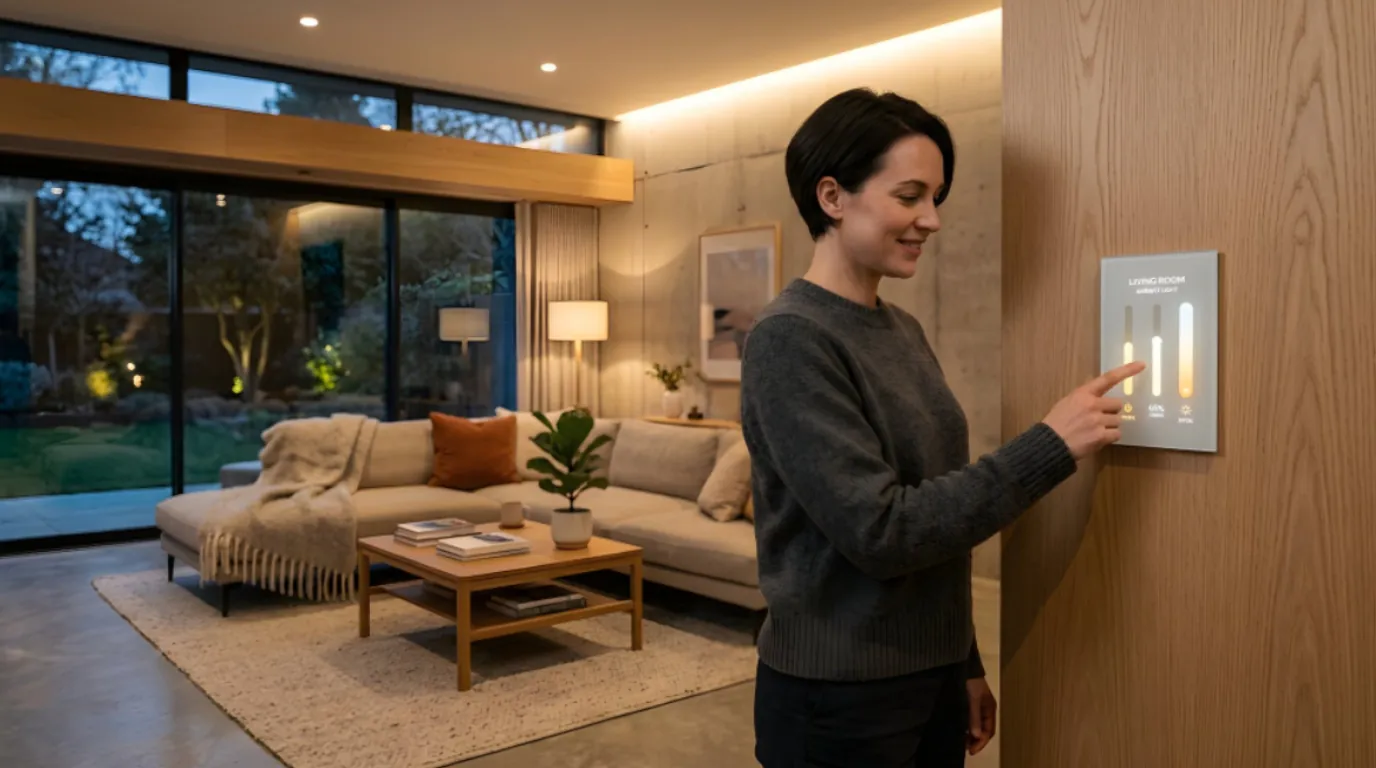
Smart switches have moved from a novelty upgrade to a genuinely common request from Singapore homeowners over the past few years, but the most frequent question we still hear in-store hasn’t changed: “will this actually work with my existing wiring?” For a lot of older HDB flats, the honest answer starts with checking for a neutral wire — and that single detail decides more about which smart switch singapore homeowners can install than brand or price ever will.
Neutral-Wire vs No-Neutral Installations
Most smart switches need a neutral wire at the switch point to power their internal Wi-Fi or Zigbee radio continuously, separate from the live wire that actually controls the light. Older HDB wiring, particularly in flats built before the mid-2000s, was often installed without running a neutral conductor to the switch itself, since traditional mechanical switches never needed one. This is the single most common reason a smart switch purchase doesn’t go smoothly — a homeowner buys a switch online, gets it home, and discovers there’s no neutral wire available to connect it.
There are two practical ways around this. Some manufacturers now offer no-neutral smart switches, which draw a small trickle of current through the light fixture itself to stay powered — these work, but can occasionally cause LED bulbs to flicker faintly when switched off, since a tiny current is still passing through. The more reliable fix is having a Licensed Electrical Worker run a neutral wire to the switch point during a renovation or a dedicated rewiring visit, which then allows any standard smart switch to be installed without compromise.
Compatibility With Existing HDB Wiring
Beyond the neutral-wire question, compatibility also depends on the type of load being switched. Smart switches designed for standard incandescent or LED loads don’t always work reliably with older fluorescent tube fittings or certain ceiling fan light kits that use a capacitor-based mechanism, so it’s worth checking a switch’s specified compatible load types before assuming any smart switch will work with any existing fixture. This is particularly relevant for households upgrading room by room rather than doing a full rewiring, since older fittings may still be present in some rooms even after others have been modernised.
Because any addition, alteration, or replacement of switches and wiring is classified as electrical installation work in Singapore, this must be carried out by a Licensed Electrical Worker rather than a general handyman, even for what looks like a simple switch swap (Energy Market Authority, n.d.). This matters more than it might seem — an incorrectly wired smart switch isn’t just a functionality problem, it’s a genuine electrical safety issue given that these devices sit permanently live on a home’s wiring circuit.
Common Setup Issues With Alexa and Google Home
Once physically installed, most setup problems come down to network configuration rather than the switch itself. Smart switches typically require a 2.4GHz Wi-Fi network specifically — many modern mesh routers default to a combined 2.4GHz/5GHz band that can cause pairing failures, so separating out a dedicated 2.4GHz network name during setup resolves a large share of “won’t connect” support calls. A second common issue is naming and room assignment inside the Alexa or Google Home app; switches that aren’t clearly assigned to a room and a distinct name become difficult to control by voice reliably, especially in a home with several switches installed across multiple rooms at once.
Firmware updates are another frequent source of confusion — a switch that worked perfectly at installation can develop odd behaviour weeks later if a manufacturer firmware update wasn’t applied, so checking for pending updates is a sensible first troubleshooting step before assuming a switch is faulty. A less obvious issue is router placement relative to the switch itself: switches installed inside a metal-backed consumer unit or behind a thick concrete wall sometimes sit right at the edge of reliable Wi-Fi range, which can look identical to a compatibility problem but is actually solved with a mesh extender rather than a different switch model.
Multi-gang switch plates — the common Singapore setup with two or three switches on a single wall plate — add a further layer of complexity, since not every smart switch brand offers a multi-gang version that fits the same wall box as the original mechanical switches. Homeowners upgrading a multi-gang plate should confirm before purchase whether the replacement is designed as a genuine multi-gang unit or is simply several single switches awkwardly combined, since the latter can create fit and wiring issues inside a standard Singapore wall box.
What’s Changed in the Smart Switch Landscape Recently
Cybersecurity has become a bigger consideration for smart home devices generally, including switches connected permanently to a home network. The Cyber Security Agency of Singapore’s Cybersecurity Labelling Scheme rates consumer smart devices according to their security provisions, giving homeowners a standardised way to compare how well a given product protects against unauthorised access before it becomes another device quietly sitting on a home Wi-Fi network (Cyber Security Agency of Singapore, n.d.). Checking for this label, where available, is a reasonable additional step for homeowners installing several smart switches throughout their home rather than a single test unit.
Pairing With a Smart Ceiling Fan for a Fuller Smart-Home Setup
Smart switches and smart ceiling fans are natural companions in a broader smart-home setup, since both typically integrate with the same Alexa or Google Home ecosystem and can be grouped into shared scenes — for instance, a single voice command that dims the lights and sets a ceiling fan to a lower speed for winding down in the evening. Households that started with a single smart switch and later added a smart ceiling fan often find the two working together makes the overall setup feel more genuinely “smart” than either device does in isolation.
Frequently Asked Questions
How do I know if my HDB flat has neutral wire at the switch point?
The most reliable way is to have a Licensed Electrical Worker check during a site visit, since this isn’t always obvious from looking at a switch plate without opening it up.
Can I install a smart switch myself if I find a neutral wire?
No — any wiring work, including connecting a smart switch even where neutral wire is present, must legally be carried out by a Licensed Electrical Worker in Singapore, not installed by a homeowner or general handyman.
Why does my smart bulb flicker slightly when switched off with a no-neutral smart switch?
This happens because no-neutral switches draw a small trickle current through the fixture to stay powered. It’s a known limitation of this switch type rather than a fault, though it’s avoidable with a neutral-wire installation instead.
My smart switch won’t connect to Wi-Fi — what’s the most common fix?
Check that you’re connecting to a dedicated 2.4GHz network rather than a combined 2.4GHz/5GHz band, since most smart switches cannot join 5GHz networks directly.
Is it worth checking for a cybersecurity label before buying a smart switch?
Yes, particularly if you’re installing multiple units throughout your home. The Cybersecurity Labelling Scheme gives a standardised way to compare security provisions across different smart switch brands.
Whether you’re dealing with a no-neutral installation, planning a full smart-home upgrade, or simply troubleshooting a switch that won’t pair reliably, getting the wiring right from the start makes everything downstream easier. If you’re planning this alongside other electrical work, Home Lighting Singapore — A Room-by-Room Planning Guide for New Renovations covers how to sequence smart switch wiring with the rest of your renovation. Visit the Regal Lighting showroom for a live demo of our smart switch range, paired with our smart ceiling fans, and speak with our team about what your existing wiring can support.
References
- Cyber Security Agency of Singapore. (2026). Cybersecurity Labelling Scheme. CSA. https://www.csa.gov.sg/our-programmes/certification-and-labelling-schemes/cybersecurity-labelling-scheme
- Energy Market Authority. (2026). Who Should I Engage To Assist With My Electrical Works? EMA. https://ema.gov.sg/resources/faqs/electricity/general-electricity-works/who-should-i-engage-to-assist-with-my-electrical-works-eg-rewiring-of-my-house