
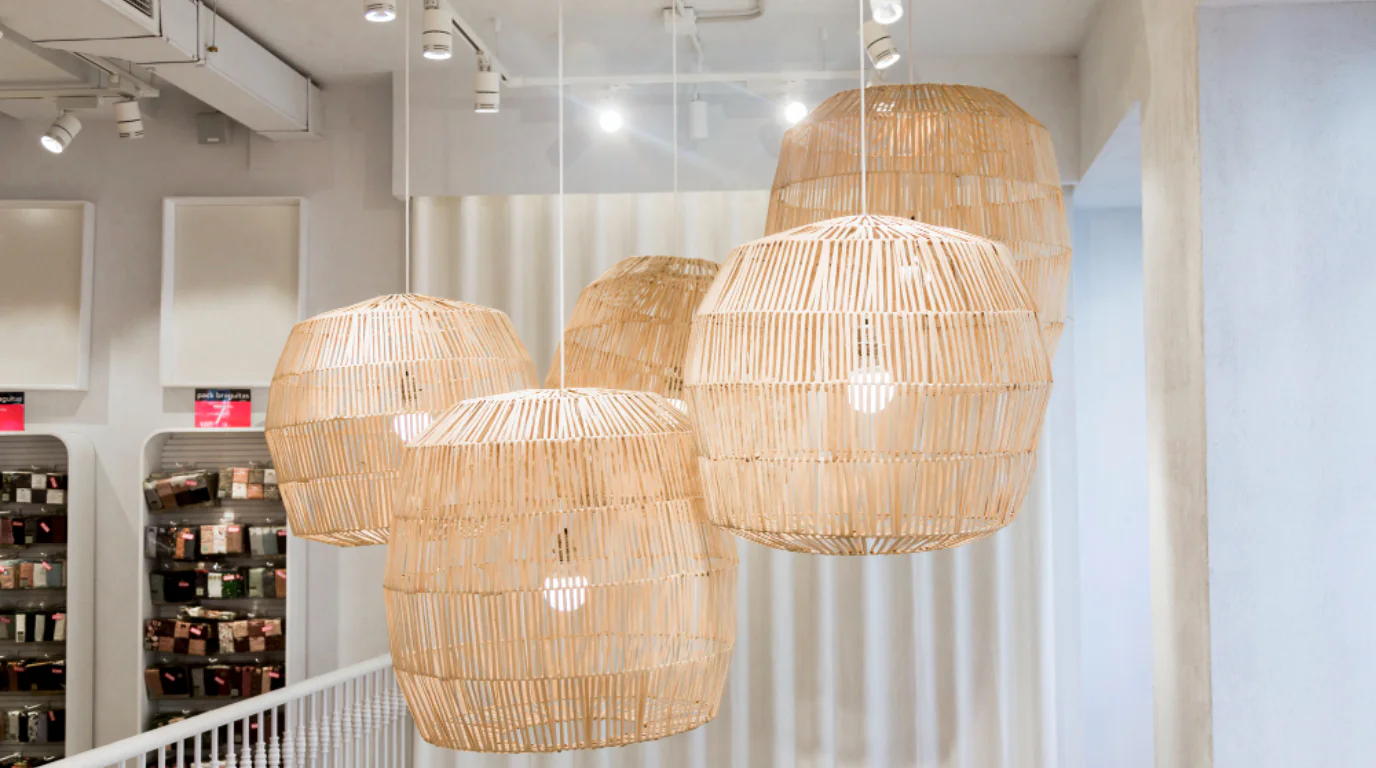
A pendant light is one of the few fixtures in a home that does real double duty — it lights a space and it’s also, quite literally, a piece of furniture hanging in mid-air. Get the size, height, and style right and a pendant becomes the anchor of a room. Get it wrong, and even a beautiful fixture ends up looking like an afterthought, either lost above a large dining table or looming too low over a kitchen island. If you’re searching pendant lights singapore for an upcoming renovation, this guide covers the sizing math, hanging height, and material choices that make the difference.
Unlike a ceiling downlight, which mostly disappears once installed, a pendant stays visually present in the room for as long as you own it, which is exactly why the details below are worth getting right the first time rather than adjusting after the fact.
How Many Pendants Do You Need, and How Big?
The most common question homeowners ask is simply: one pendant, or several? The answer usually comes down to the size and shape of the surface below.
For a round or square dining table under roughly 4 feet across, a single, larger pendant centred over the table works well. For a longer rectangular table, or a wider kitchen island, two or three smaller pendants spaced evenly tend to look more proportional than one oversized fixture stretched to cover the whole surface, and they distribute light more evenly along the table’s length.
A simple rule of thumb for sizing a single pendant light for dining table use is to aim for a diameter of roughly half to two-thirds of the table’s width — so a 150cm table suits a pendant somewhere between 75cm and 100cm in total spread if you’re using a cluster, or a single fixture in that diameter range if going with one statement piece. For kitchen island pendant lights singapore layouts, the same principle applies to the island’s length, with an additional buffer of clearance at each end so the pendants don’t feel cramped against the island’s edges.
Getting the Hanging Height Right
Hanging height is where many otherwise well-chosen pendants go wrong. Over a dining table, the general guide is to position the bottom of the pendant around 75–90cm above the tabletop — low enough to create intimacy and focus light where it’s needed, but high enough that guests aren’t ducking around the fixture or losing eye contact with people across the table.
Over a kitchen island used for prep work, aim slightly higher, since the surface is a working area rather than a seated dining space — this keeps the fixture clear of anyone standing and leaning over the counter. For pendant lighting HDB flats with lower-than-average ceiling heights, consider a flatter, wider pendant silhouette rather than a long, narrow drop fixture, since it delivers presence without eating into limited headroom.
If your ceiling has a sloped or stepped section, as some HDB layouts do near the kitchen or dining area, measure the drop at the exact point where the pendant will hang rather than using a single ceiling height figure for the whole room — a difference of even 20–30cm between one part of the ceiling and another can change which fixture size and drop length actually works.
Matching Pendant Style to Ceiling Height and Layout
Open-concept layouts, increasingly common in newer condo developments, benefit from pendants that read well from multiple angles, since the fixture is often visible from the living area, kitchen, and dining space simultaneously. A pendant with an interesting silhouette from below (important, since many viewing angles in an open-plan home are from underneath or at an angle rather than straight-on) tends to perform better here than one designed only to be viewed head-on.
For lower ceilings typical of many HDB flats, flush or semi-flush pendant styles — where the fixture sits closer to the ceiling with a shorter drop — maintain headroom while still delivering a decorative, layered lighting look rather than a single flat downlight.
Materials and Finishes
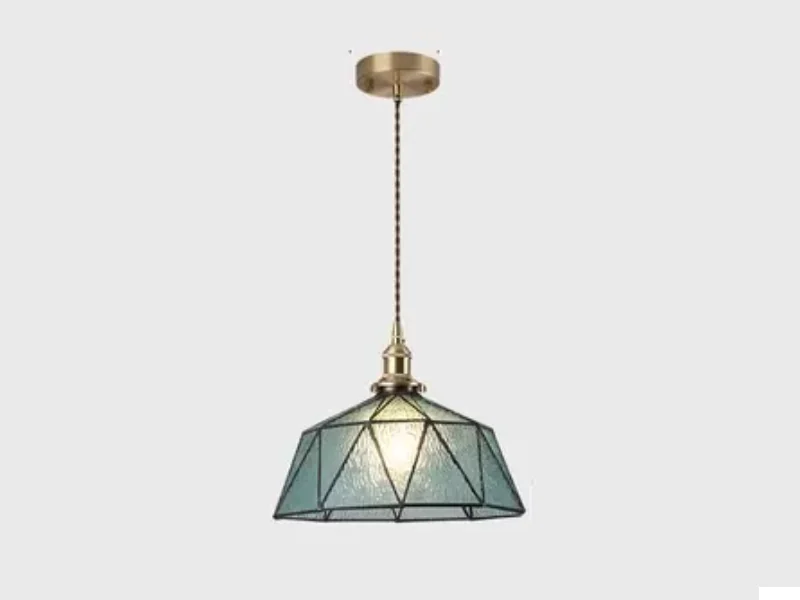
Glass pendants, whether clear, frosted, or tinted, tend to feel lighter and less visually heavy, which suits smaller dining spaces or lower ceilings where a bulkier fixture might feel oppressive. The Waves Pendant is one example of this style, finished in blue glass with a brass base plate, and suits both a dining table and a kitchen island.
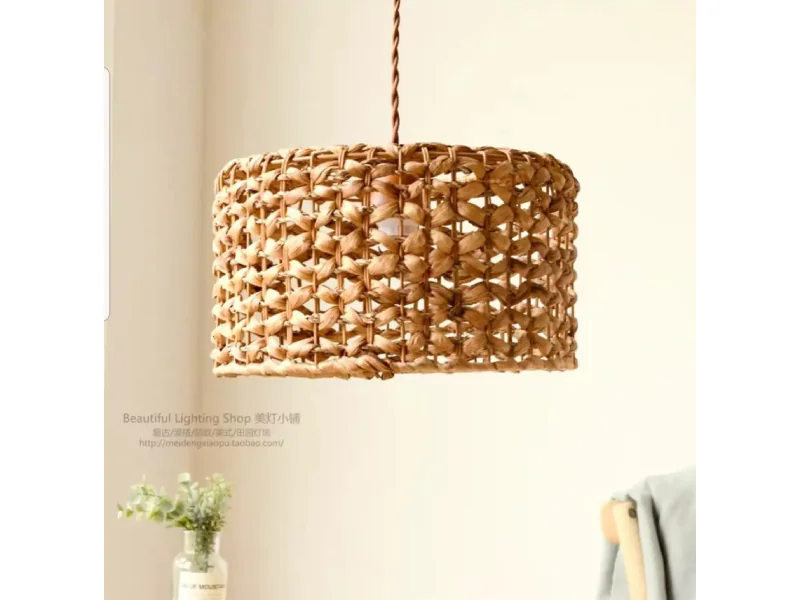
Rattan and woven pendants bring texture and warmth, and have become especially popular in Singapore homes leaning toward a natural, resort-style aesthetic. They pair particularly well with timber dining tables and warmer colour palettes.
Metal pendants, in finishes from matte black to brushed brass, suit more contemporary or industrial-leaning interiors and tend to make a stronger style statement than glass or rattan alternatives.
Whatever material you choose, pay attention to the light source itself. Since 2015, general purpose lamps sold in Singapore — including LED bulbs commonly fitted into pendant fixtures — have fallen under the National Environment Agency’s Mandatory Energy Labelling Scheme, which rates lamps for energy efficiency to help consumers compare options (National Environment Agency, n.d.). Pairing a well-chosen pendant with an efficient, appropriately warm-toned LED bulb (2700K–3000K suits most dining and living spaces) gets the best of both style and running cost.
A Note on Colour Temperature
Colour temperature, measured in Kelvin, has a real effect on how a pendant-lit space feels. Warmer tones (2700K–3000K) suit dining rooms and living areas, creating a cosy, inviting glow, while cooler tones (3500K–4000K) suit task-focused areas like a kitchen island where clarity matters more than ambience. The U.S. Department of Energy notes that LED lighting’s flexibility in colour temperature and dimming is one of the technology’s key advantages over older lighting types, making it easier to fine-tune a space’s mood without changing the fixture itself (U.S. Department of Energy, n.d.).
Frequently Asked Questions
Can I hang a pendant light myself?
Simple swaps using an existing ceiling point are sometimes manageable yourself, but anything involving new wiring or relocating the ceiling point should go through a licensed electrician.
What’s the ideal drop length for a pendant over a dining table?
Position the bottom of the fixture roughly 75–90cm above the tabletop as a starting point, adjusting slightly for ceiling height and table size.
Are pendant lights suitable for low-ceiling HDB flats?
Yes — choose a flatter or semi-flush silhouette rather than a long drop fixture to maintain headroom while still adding visual interest.
How many pendants should I use over a kitchen island?
Two to three evenly spaced smaller pendants generally look more proportional than a single oversized fixture on islands longer than about 1.8 metres.
Do pendant lights work well with dimmers?
Yes, provided both the bulb and the dimmer switch are compatible with each other — check this before installation to avoid flickering.
Bringing It All Together
A well-chosen pendant light does more than illuminate a table — it sets the tone for the whole room. Getting the size, height, and finish right takes a bit more thought than picking a ceiling light off the shelf, but the payoff is a fixture that feels intentional rather than incidental.
Visit the Regal Lighting showroom to see pendant styles and sizes in person, or speak with our team for tailored sizing advice based on your table or island dimensions.
REFERENCES:
- National Environment Agency. (n.d.). About Mandatory Energy Labelling Scheme and Minimum Energy Performance Standards. NEA Singapore. https://www.nea.gov.sg/our-services/climate-change-energy-efficiency/energy-efficiency/household-sector/about-mandatory-energy-labelling-and-minimum-energy-performance-standards
- U.S. Department of Energy. (n.d.). LED Lighting. Energy.gov. https://www.energy.gov/energysaver/led-lighting