
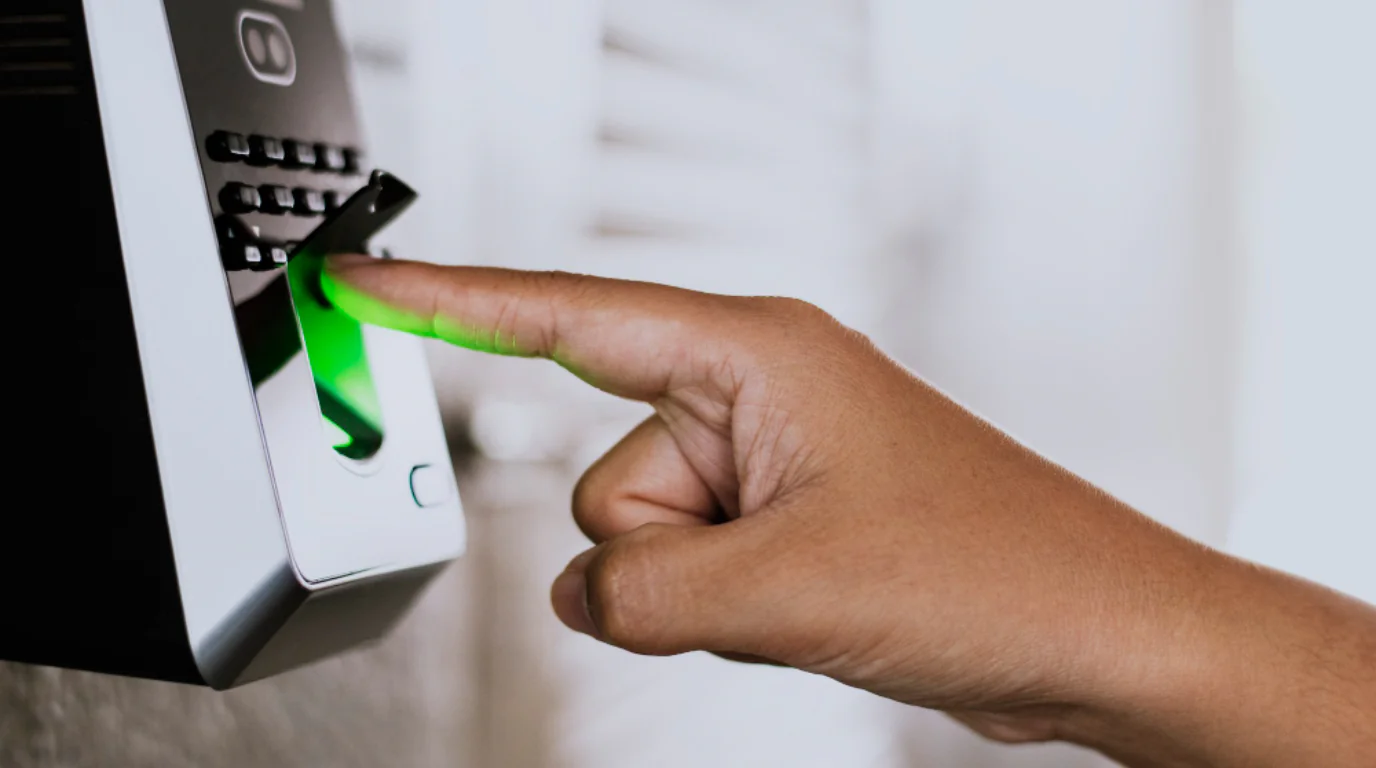
If you’ve already read our first comparison of digital lock singapore options against traditional keyed locks, this guide picks up where that one left off. The questions we hear most often from homeowners aren’t about whether to switch to a digital lock — most people have already decided that — they’re about the practical details: what happens when the battery dies, does my HDB main door allow this, and can I retrofit a digital lock onto the door I already have without replacing the whole thing?
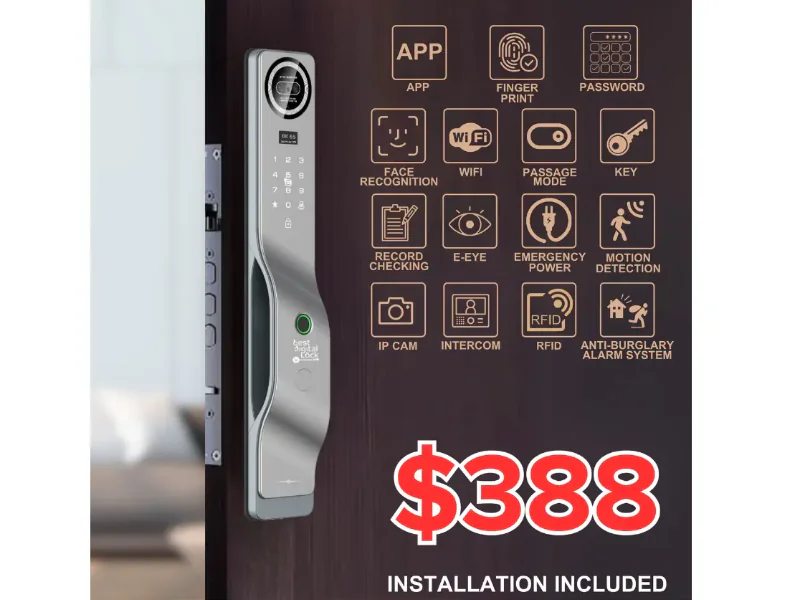
These are exactly the questions worth answering properly before you buy, since a digital lock sits on your main entrance door — arguably the single most security-critical fixture in your home — and for many HDB flats, that door also happens to be a fire-rated element with its own compliance requirements. Getting the practical details right upfront saves a return trip to the supplier, or worse, a failed inspection during a resale. The BDL-5000, with facial recognition, fingerprint, password, and RFID card access, is a useful reference point for the battery and backup features discussed below.
Battery Life and What Happens When It Runs Out
Most digital locks run on standard AA or AAA batteries, or a dedicated rechargeable pack, and typically last anywhere from six months to over a year depending on how frequently the lock is used and whether it includes power-hungry features like a built-in camera or large touchscreen. Nearly every reputable digital lock includes a low-battery warning — usually a beep or flashing light — that gives you a window of weeks before the batteries are fully depleted, so a dead battery rarely arrives as a total surprise.
For the moment batteries do run out entirely, look for a lock with a mechanical key override or an external battery terminal (often a 9V connection point on the outside of the lock body) that lets you jump-start the lock temporarily to get inside and swap the batteries properly. A digital lock without any backup entry method is worth avoiding, since it turns a simple battery change into a locksmith call.
It’s also worth asking how the lock notifies you of low battery — some models only beep at the door itself, which is easy to miss if you’re the last one home each night, while others send a push notification to a companion app. If your household relies heavily on the digital lock as the only entry method (no spare mechanical key kept anywhere), a model with app-based battery alerts is the safer choice, since you’ll get advance warning even before you’re standing at the door.
HDB Fire Door Compliance: What You Need to Know
This is the question that trips up the most homeowners, and it’s worth getting right. Many HDB main entrance doors are fire-rated doors, required wherever the flat’s entrance faces a common corridor, lift lobby, or staircase within a certain distance (Housing & Development Board, n.d.). A fire-rated door is only effective as a complete system — the door leaf, frame, seals, and hardware, including the lock, all need to maintain the door’s fire-resistance rating together.
The Singapore Civil Defence Force (SCDF) requires that any digital lockset installed on a fire-rated door carry a valid Certificate of Conformity (CoC), confirming it has been tested and certified for fire resistance to standards such as SS 332 or EN 1634-1 (Singapore Civil Defence Force, n.d.). This certification can be issued either together with the fire door itself, if the lock was supplied and tested as part of the original door set, or individually, for a digital lock being retrofitted onto an existing certified fire door. In either case, ask your supplier or installer to show you the CoC documentation before installation, rather than assuming any digital lock on the market is automatically suitable for a fire-rated door.
Non fire-rated internal doors, such as bedroom or bathroom doors, don’t carry this same requirement, so a wider range of digital locks can be used there without needing fire certification.
Retrofitting a Digital Lock Onto an Existing Door
The good news is that most homeowners don’t need to replace their entire door to add a digital lock — retrofitting onto an existing door frame is the norm, not the exception. The key considerations are:
Door thickness and material. Most digital locks are designed to fit standard door thicknesses, but it’s worth confirming your door’s thickness against the lock’s specification sheet before purchase, particularly for older or non-standard doors.
Existing mortise cavity. Many retrofits reuse the existing mortise (the recessed cavity inside the door where the lock mechanism sits), which minimises new drilling. A professional installer can assess whether your existing cavity is compatible with your chosen lock model.
Fire door integrity. As covered above, if your door is fire-rated, the replacement lock needs its own CoC, and installation shouldn’t compromise the door’s existing seals or fire-resistant core.
Professional installation. Even though digital locks are marketed as straightforward upgrades, professional installation avoids the risk of excess drilling that can compromise a fire-rated door’s certification, and ensures the lock is properly calibrated from day one.
Warranty and After-Sales Support
Because a digital lock is both a mechanical and an electronic product, warranty coverage typically splits into two parts: the mechanical components (the deadbolt, latch, and housing) and the electronics (the keypad, sensor, and battery management). When comparing brands, check how long each part of the product is covered, whether local servicing and spare parts are available in Singapore, and how quickly a technician can attend if the lock develops a fault — this practical support matters more day-to-day than any single flashy feature.
It’s also worth asking what happens to your lock’s warranty if it’s installed by a third-party contractor rather than the supplier’s own installer — some manufacturers require professional installation from an approved partner to keep the warranty valid, which is worth confirming before you commit to a lower-cost independent installer.
Frequently Asked Questions
How do I know if my HDB main door is fire-rated?
Fire-rated doors typically carry a serial label near the hinges. If you’re unsure, your renovation contractor or the door supplier can confirm this for you.
Can I use any digital lock on a non-fire-rated door?
Generally yes — the fire certification requirement applies specifically to fire-rated doors, so internal doors have far more flexibility in lock choice.
What happens if my digital lock’s battery dies while I’m out?
Look for a lock with an external battery terminal or mechanical key backup; either lets you regain entry without needing a locksmith.
Do I need a permit to install a digital lock?
A like-for-like lock replacement on an existing door generally doesn’t require a permit, but always confirm with your renovation contractor if any door or frame modification is involved.
How long does a digital lock installation take?
A straightforward retrofit onto an existing door typically takes under an hour for a professional installer, assuming no structural changes are needed.
Making the Switch With Confidence
A digital lock is a genuine everyday convenience upgrade, but on a Singapore HDB main door, the fire-safety compliance question deserves real attention rather than an afterthought. Confirm your door’s fire rating, ask for CoC documentation on any lock you’re considering, and have it professionally installed.
Visit the Regal Lighting showroom to see our digital lock range in person, or speak with our team about compatibility with your specific door before you buy.
REFERENCES:
- Singapore Civil Defence Force. (n.d.). Digital Locksets on Fire-Rated Doors. SCDF. https://www.scdf.gov.sg/fire-safety-services-listing/permits-and-certifications/digital-locksets-on-fire-rated-doors
- Housing & Development Board. (n.d.). Guidelines for Building Works. HDB. https://www.hdb.gov.sg/residential/living-in-an-hdb-flat/renovation/guidelines/building-works