
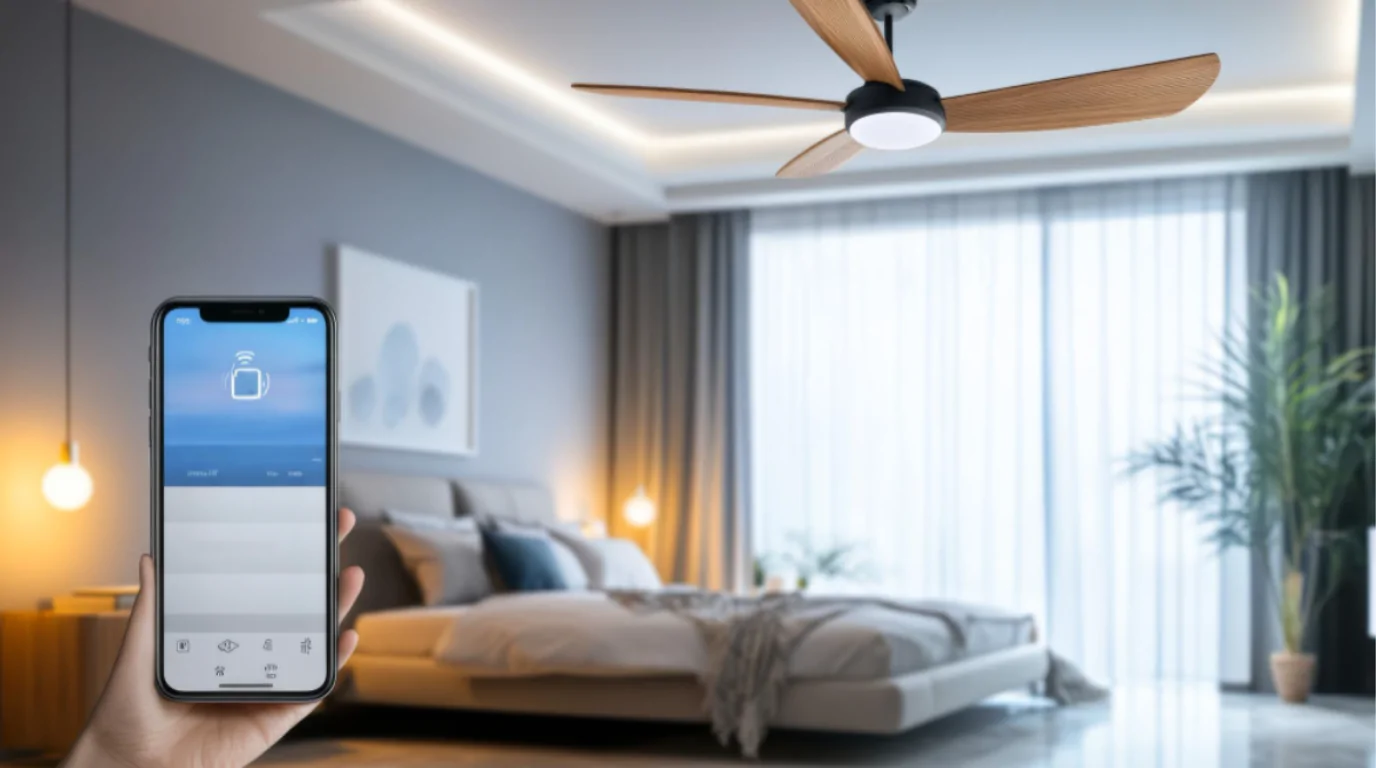
Smart Ceiling Fans Singapore: App Control, Scheduling, and Smart Home Integration
A smart ceiling fan singapore homeowner searches for today is usually after one thing above all: the ability to control airflow, lighting, and scheduling without reaching for a remote or a wall switch. What started as a premium add-on a few years ago has become close to standard across most mid-range and premium ceiling fan brands, and understanding what “smart” actually means across different manufacturers helps you avoid paying extra for features you will not use, or missing ones you will.
What Makes a Ceiling Fan “Smart”
At a basic level, a smart ceiling fan connects to your home Wi-Fi and can be controlled through a manufacturer app, allowing you to adjust fan speed, toggle the light, and set schedules from your phone rather than a physical remote. More advanced models add voice assistant compatibility, letting you control the fan through Google Home or Amazon Alexa, and DC motor energy savings, which reduce running costs compared to older AC motor designs. The combination of app control, scheduling, and voice compatibility is what separates a genuinely smart fan from one that is simply remote-controlled.
Brands Leading the Smart Fan Category
Mowe — Affordable Smart Innovation
Mowe has expanded its Mowe Helios smart ceiling fan range significantly in recent years, and nearly all of its current models, including the Helios and Gale series, come smart-enabled as standard. Priced generally between $249 and $329, Mowe has positioned itself as the accessible entry point into smart ceiling fans without requiring homeowners to pay a premium price for basic app control.
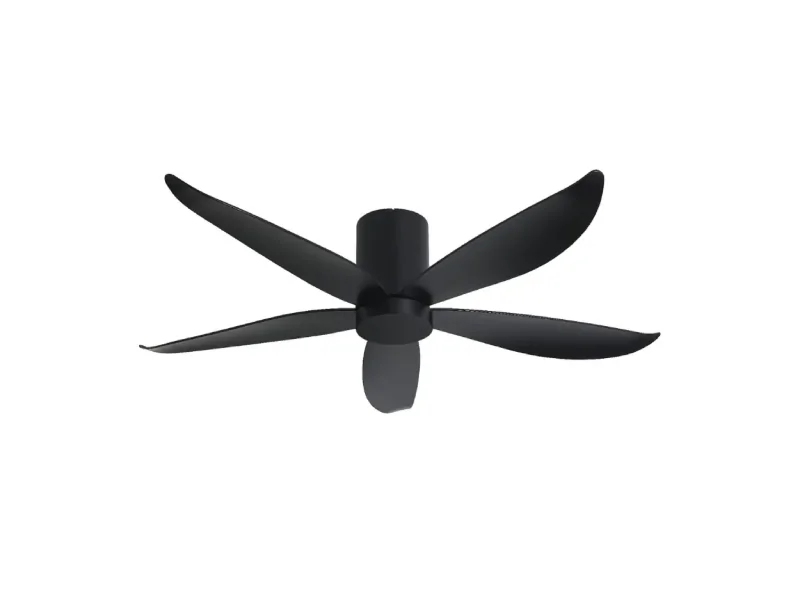
Efenz — Smart and Built to Last
The Efenz ceiling fan range pairs smart function with the durability and quiet operation the brand is already known for. Most current Efenz models, including the Troy, Isabel, and Isaac series, are smart-enabled, giving homeowners app control alongside Efenz’s established reputation for long-term reliability and Samsung dimmable LED lightkits.
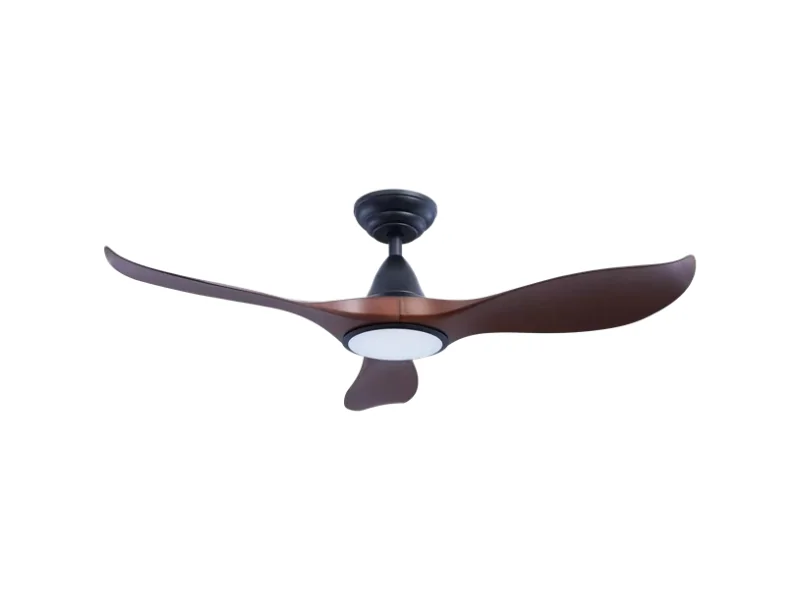
Point One — Smart-Enabled Across the Entire Range
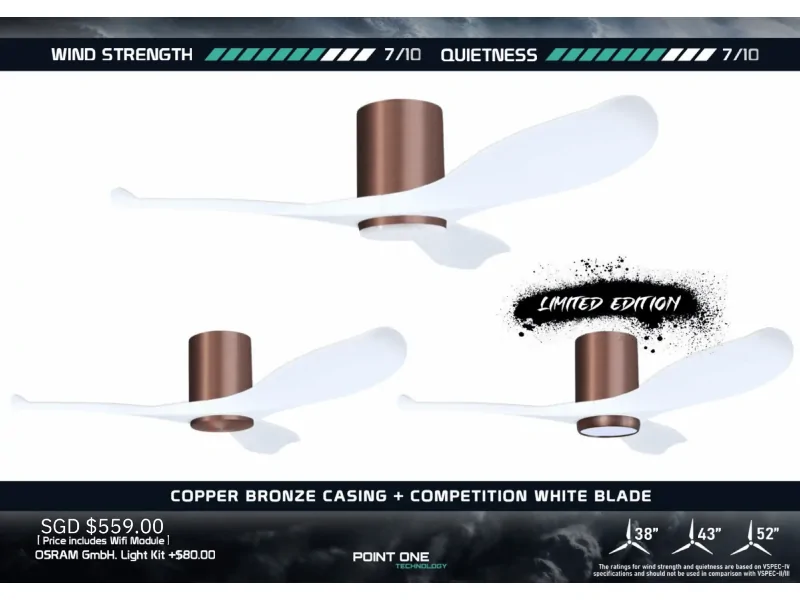
Point One ceiling fans have built smart functionality into essentially their entire lineup, not just selected models. Every Point One fan uses an EC motor and is smart-enabled, reflecting the brand’s consistent focus on research and development to improve both efficiency and connected features across the board.
Connecting Your Fan to Google Home or Alexa
The general process across most smart ceiling fan brands follows a similar pattern. First, download the manufacturer’s companion app and create an account. Next, put the fan into pairing mode, usually by holding a button on the fan’s receiver or remote for a few seconds until an indicator light blinks. Connect the fan to your home Wi-Fi network through the app, following the on-screen prompts. Once paired successfully, link the app to Google Home or Amazon Alexa through the “link account” or “add device” option within your voice assistant’s own app. After linking, you should be able to control the fan by voice command, and set schedules or scenes that combine the fan with other smart home devices.
Smart vs Standard Remote-Control Fans
A standard remote-control fan lets you adjust speed and light from a handheld remote, but offers no scheduling, no app access, and no voice control. A smart fan builds on this with app-based control from anywhere in the home, automated scheduling so the fan turns on before you arrive home or off overnight, and integration with existing smart home routines. For homeowners who already use smart lighting or smart switches elsewhere in the home (see our upcoming Smart Switches Singapore guide), a smart ceiling fan extends that same convenience to airflow control, creating a more consistent smart home experience throughout the house.
The gap in price between smart and standard remote-control fans has narrowed considerably, particularly with brands like Mowe making smart function close to standard across their range. For most homeowners renovating today, choosing a smart-enabled model from Mowe, Efenz, or Point One costs little to nothing extra over a standard remote fan, while adding scheduling and voice control that pay off in daily convenience.
Energy Savings from DC Motor Smart Fans
Most smart ceiling fans on the market today, including the Mowe, Efenz, and Point One ranges, use DC motors rather than older AC motor designs. DC motors consume noticeably less power for the same airflow output, and running a DC ceiling fan continuously overnight typically costs a fraction of running an air-conditioning unit for the same period. NEA and the Energy Market Authority (EMA) both encourage this kind of appliance-level energy saving. When paired with app-based scheduling, homeowners can further reduce running costs by setting the fan to automatically switch off after everyone has left for the day, or reduce to a lower speed setting overnight, without needing to remember to adjust it manually.
Common Setup Issues and How to Avoid Them
The most common issue homeowners encounter when setting up a smart ceiling fan is a weak Wi-Fi signal at the fan’s receiver location, particularly in larger homes or units with thick concrete walls between the router and the bedroom. If pairing repeatedly fails, moving the router closer or adding a Wi-Fi mesh extender near the affected room usually resolves it. Another common issue is attempting to pair the fan while it is already connected to a previous account, such as in a resale flat — performing a factory reset on the fan’s receiver before pairing to a new account typically clears this.
Making the Right Choice for Your Home
If budget is the primary consideration, Mowe offers the most accessible entry point into smart ceiling fans without a significant price premium. If you are prioritising long-term reliability alongside smart function, Efenz is worth a closer look. And if you want smart function guaranteed across every model in a range, without needing to check individual product specifications, Point One removes that uncertainty entirely. Whichever brand you lean toward, it is worth confirming compatibility with your existing home network and voice assistant setup before purchase, since this is the step most likely to affect your day-to-day experience once the fan is installed. Visit Regal Lighting Gallery to see all three brands’ smart fan ranges in person and get hands-on guidance on which pairs best with your existing smart home setup.
Frequently Asked Questions
What is the difference between a remote-control fan and a smart ceiling fan?
A remote-control fan only offers handheld speed and light control, while a smart fan adds app control, scheduling, and often voice assistant compatibility through Wi-Fi.
Which brand offers the most affordable smart ceiling fans?
Mowe is generally the most accessible option, with most current models smart-enabled as standard in the $249 to $329 price range.
Are all Point One ceiling fans smart-enabled?
Yes, essentially the entire Point One range is smart-enabled and uses an EC motor, so you do not need to check individual models for this feature.
Can a smart ceiling fan be controlled through Google Home or Alexa?
Most smart ceiling fan brands support this after the fan is paired to the manufacturer app and the account is linked within your voice assistant’s app.
Do smart ceiling fans cost significantly more than standard remote fans?
The price gap has narrowed considerably, and brands like Mowe now offer smart function at prices close to standard remote-control fans.
References
- National Environment Agency Singapore — Climate Vouchers for Energy-Efficient Appliances — https://www.nea.gov.sg
- Energy Market Authority Singapore — Energy-Efficient Home Appliances — https://www.ema.gov.sg