
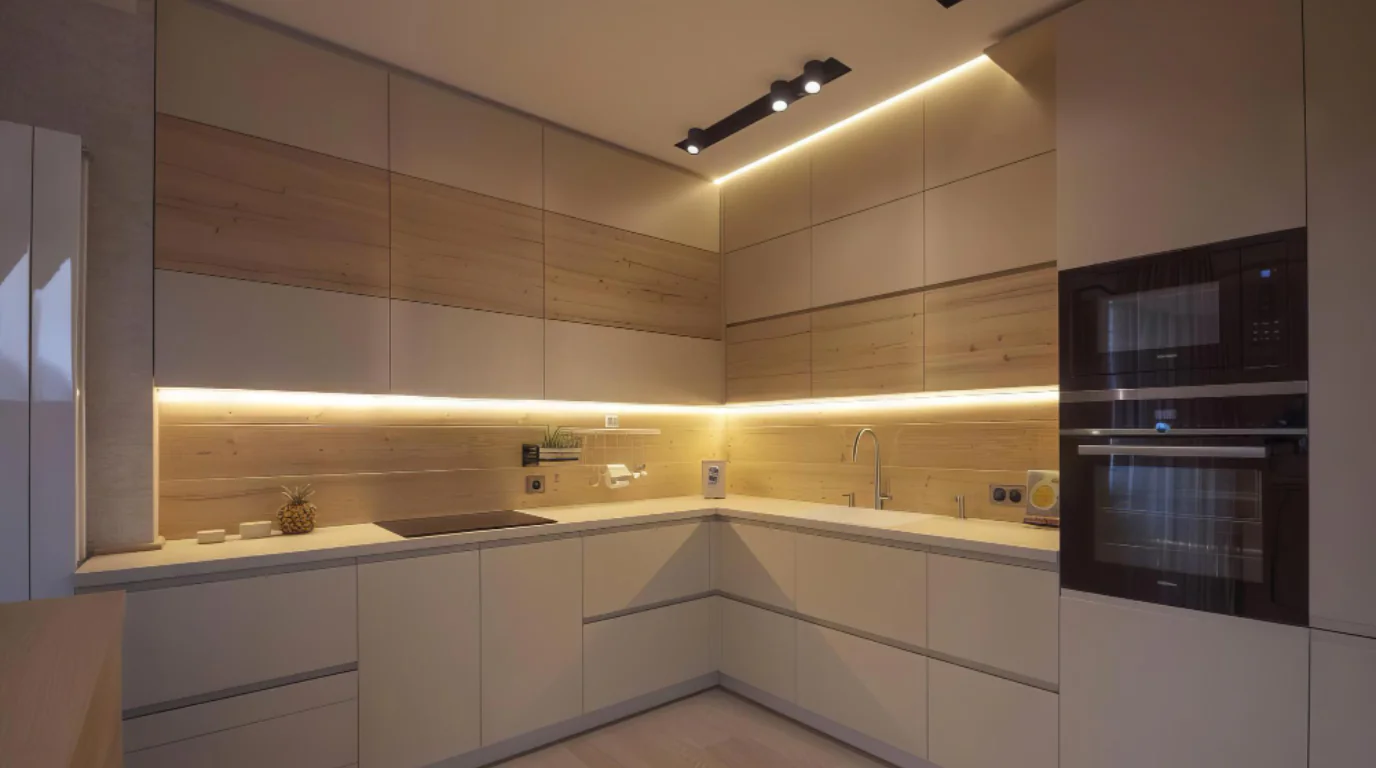
If you’ve scrolled through home renovation photos on Instagram, you’ve almost certainly seen that soft glow washing up a ceiling edge or spilling out from under a kitchen cabinet. That’s LED strip lighting, and it has quietly become one of the most requested upgrades among Singapore homeowners renovating their HDB flats and condos. LED strips singapore searches have grown because strips solve a specific problem: how do you add mood, depth, and function to a room without more visible fixtures cluttering the ceiling?
LED strip lights singapore options today are far more capable than the basic warm-white tape many of us remember from a decade ago, with adjustable colour temperatures, RGB colour-changing modes, and IP-rated waterproofing for damp areas. Because they’re sold in rolls rather than fixed fittings, choosing and installing them well takes a little more homework than picking a ceiling light off a shelf. This guide covers where LED strips work best in a Singapore home, what to check before buying, how to install them, and what to do when something doesn’t look quite right.
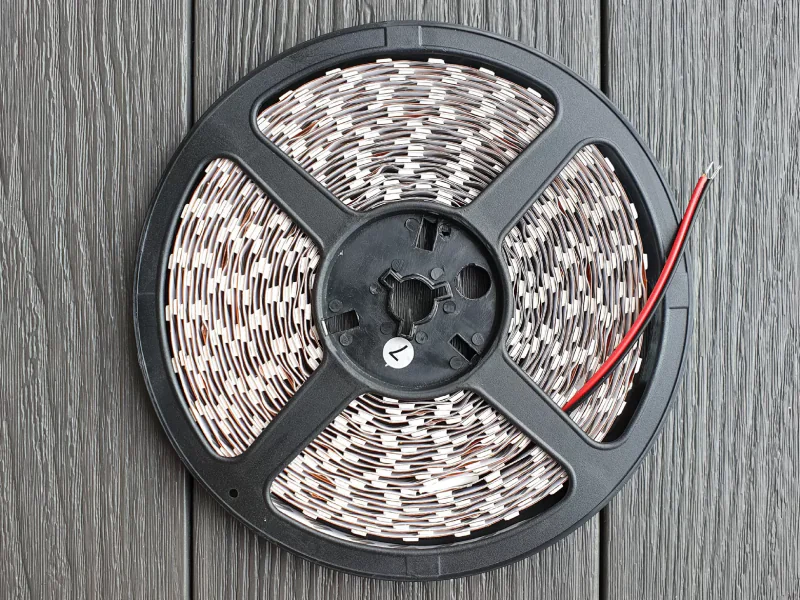
For homeowners who want a strip that adapts to different areas of the home, options like the LED Strip 5050 are customisable by the metre in daylight, cool white, or warm white — a practical starting point for the cove and under-cabinet applications covered below.
What Are LED Strip Lights and Why Singapore Homeowners Are Switching
An LED strip is a flexible circuit board embedded with small LED chips, sold on an adhesive-backed roll that can be cut to length at marked intervals. They’re powered by a low-voltage transformer (commonly 12V or 24V) and controlled by a switch, dimmer, or app for RGB strips.
The appeal for HDB and condo owners is straightforward: strips are thin enough to hide inside a coving recess, under a cabinet lip, or behind a TV console, so the light source itself disappears and only the glow is visible. That makes them ideal for smaller Singapore homes where every visual line matters — a well-placed strip can make a room feel larger and more considered without adding a single new visible fixture.
Where to Use LED Strips in Your Home
Cove Lighting for Ceilings
Cove lighting singapore has become one of the most popular ways to add a soft ambient glow to a living room or bedroom ceiling. A strip is recessed into a false-ceiling coving, facing upward or outward, so the light bounces off the ceiling rather than shining directly into the room — keeping the sightline clean while still lifting the whole room’s mood in the evening.
Under-Cabinet Kitchen Lighting
An under cabinet led strip is one of the most functional upgrades you can make to a kitchen. Overhead lighting alone often leaves your countertop in shadow, since your own body blocks the light exactly where you’re chopping or reading a recipe. A strip fitted under the upper cabinets throws even, glare-free light onto the worktop — look for a minimum IP44 rating here, since kitchen counters see steam, splashes, and grease.
TV Console and Feature Wall Backlighting
Placing a strip behind a TV console or feature wall creates what’s often called bias lighting — a soft backglow that reduces eye strain in a dim room and adds depth to an otherwise flat wall. RGB strips are especially popular here, letting you match the glow to whatever you’re watching, or simply set a warm white tone for everyday use.
Staircase and Step Lighting
For landed homes and maisonette HDB units with internal staircases, strip lighting along the underside of each step improves both safety and style — especially a motion-sensor strip that lights up automatically, which makes a real difference for elderly family members moving around at night.
Choosing the Right LED Strip: IP Rating, Colour Temperature, and RGB
Three specifications matter most when shopping for LED strips:
IP Rating. This tells you how resistant the strip is to moisture and dust. IP20 strips are for dry indoor areas only (living rooms, coves). IP44 or higher is recommended for kitchens, and IP65 or above for anywhere near direct water contact, such as an outdoor balcony.
Colour Temperature. Measured in Kelvin, this determines whether the light looks warm and cosy (2700K–3000K, good for living rooms and bedrooms) or crisp and functional (4000K–5000K, better suited to kitchens and work areas). Some strips offer adjustable colour temperature within a single fixture, which is useful if you’re not sure which tone you’ll prefer once the space is finished.
RGB and Smart Control. RGB (and RGBW, which adds a true white channel) strips let you shift between colours and are usually app or remote-controlled. If you’re already using smart switches or a voice assistant elsewhere in the home, look for a strip that integrates with the same ecosystem so you’re not juggling multiple apps.
A Beginner’s Installation Walkthrough
Installing a basic LED strip is approachable for most homeowners, provided the wiring stops at low-voltage DC:
- Measure the run and buy a strip length that matches, remembering strips can only be cut at marked lines, usually every 5–10cm.
- Clean the surface thoroughly before applying the adhesive — dust or grease under the tape is the most common reason strips peel off within months.
- Connect the strip to its driver/transformer, matching the voltage rating exactly (a 24V strip on a 12V driver won’t light up correctly).
- Test the strip before final adhesion to confirm every segment lights evenly before committing to sticking it down.
- Route the cable neatly using cable clips so nothing dangles visibly, especially for cove and under-cabinet runs.
For anything involving cutting into a false ceiling or running new wiring into your flat’s main electrical circuit, engage a licensed electrician rather than doing it yourself.
Troubleshooting Common LED Strip Issues
Flickering usually comes from an incompatible dimmer switch, a loose connector, or an undersized driver — try a direct, non-dimmed connection first to isolate the cause.
Uneven brightness along the strip often means voltage drop on long runs (over 5 metres on one circuit). Power the strip from both ends, or split it into two shorter circuits.
Colour inconsistency between sections usually comes from joining rolls from different batches — buying one continuous roll for a single run avoids this.
Frequently Asked Questions
Are LED strips safe to use in a bathroom?
Yes, with a strip rated at least IP65 and the transformer kept outside the wet zone.
How long do LED strips typically last?
Quality strips are commonly rated for 25,000–50,000 hours — well over a decade of typical use.
Can I dim any LED strip?
Only if the strip and driver are both dimmable and paired with a compatible dimmer switch, otherwise flickering or premature failure can result.
Do LED strips use a lot of electricity?
No — a typical run uses a fraction of the wattage of equivalent traditional lighting.
Can I install LED strips myself in an HDB flat?
Simple plug-in or low-voltage installations are generally fine yourself. Anything requiring new wiring should go through a licensed electrician.
Bringing the Idea to Life
LED strips are one of the few lighting upgrades that genuinely change how a room feels without changing how it looks during the day — the strip disappears, and only the effect remains. Whether you’re planning a cove, solving a dark kitchen counter, or adding drama behind the TV console, getting the IP rating, colour temperature, and installation right the first time saves a re-do later.
If you’d like to see LED strip options in person — different colour temperatures and RGB demos running side by side — visit the Regal Lighting showroom or get in touch with our team for tailored advice on the right strip for your space.
REFERENCES:
- National Environment Agency. (n.d.). About Mandatory Energy Labelling Scheme and Minimum Energy Performance Standards. NEA Singapore. https://www.nea.gov.sg/our-services/climate-change-energy-efficiency/energy-efficiency/household-sector/about-mandatory-energy-labelling-and-minimum-energy-performance-standards
- U.S. Department of Energy. (n.d.). LED Lighting. Energy.gov. https://www.energy.gov/energysaver/led-lighting