
Corner Fans Singapore: Different Types and How to Choose the Right One
Not every room in a Singapore home has the ceiling clearance, wiring, or even the need for a full ceiling fan installation. That is where a corner fan singapore search usually leads — homeowners looking for a compact, flexible alternative that can be mounted on a wall or placed in a tight corner without the cost and disruption of ceiling work. Corner fans have become a popular addition to balconies, kitchens, home offices, and even bedrooms where a ceiling fan simply is not practical.
What Is a Corner Fan and Why Choose One
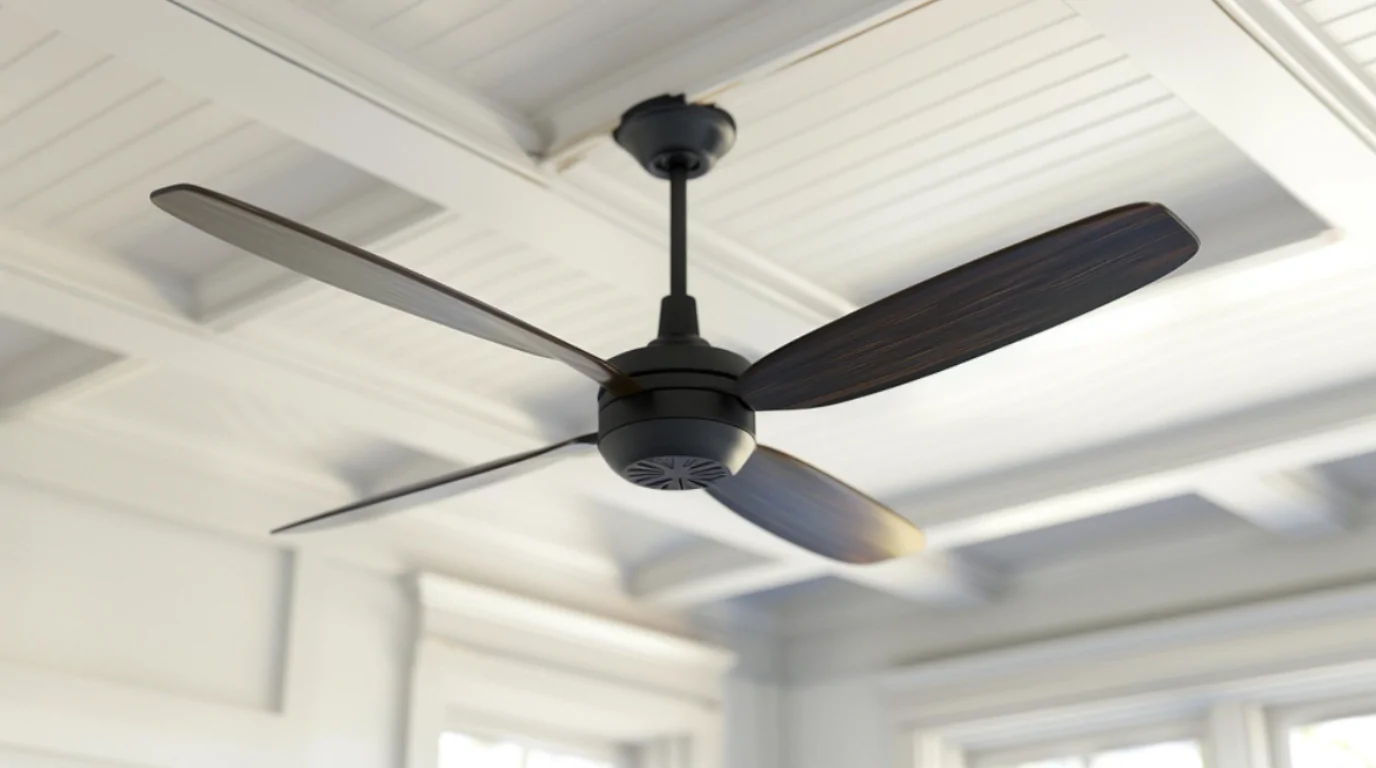
A corner fan is a compact fan designed to be mounted on a wall bracket or placed as a standing unit in an underused corner of a room, rather than installed on the ceiling. It solves a very specific problem: many HDB flats and older condo units either lack ceiling wiring for a fan point, have low ceilings that make a bladed ceiling fan feel cramped, or simply have a room where a ceiling fan would be visually or structurally awkward — you can browse our full ceiling fans category for comparison. Corner fans fill that gap with strong directional airflow in a much smaller footprint.
Types of Corner Fans
Wall-Mounted Corner Fans
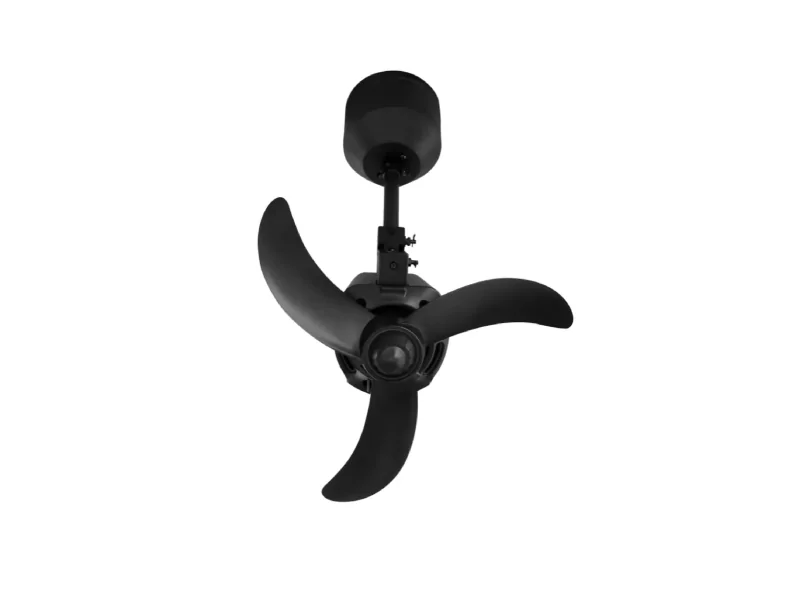
Wall-mounted corner fans are fixed to a bracket, usually at head height or higher, and oscillate to circulate air across the room. These are the most common choice for kitchens, utility areas, and balconies, since they free up floor space entirely and keep the unit out of the way of foot traffic.
Standing Corner Fans
Standing corner fans sit on the floor and are designed with a slim profile that tucks neatly into a corner without protruding far into the room. They offer more flexibility since they can be moved between rooms, but they do take up some floor space, which matters in smaller HDB layouts.
Bracket-Mounted and Dual-Axis Corner Fans
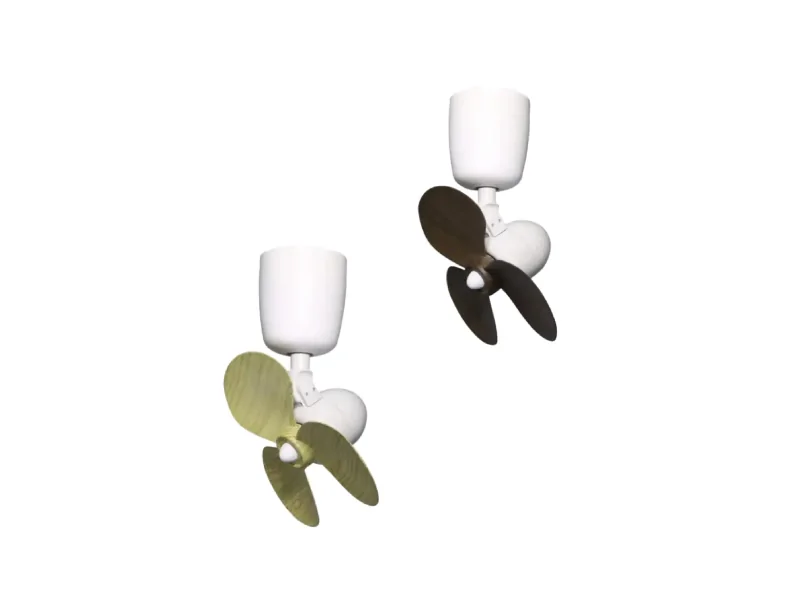
Newer models, such as dual-axis corner fans, mount higher on the wall and oscillate on two axes rather than one, giving broader air coverage across a room from a single fixed point. These tend to suit larger living areas or open-plan spaces where a single-axis wall fan would only cover part of the room.
Smart Features on Modern Corner Fans
Many corner fans now come with smart-enabled control as standard, allowing scheduling, speed adjustment, and oscillation settings to be managed from a smartphone app rather than a physical remote. This is particularly useful for wall-mounted units placed higher up, where reaching a physical remote or button panel is less convenient. Pairing a smart corner fan with an existing smart home setup also allows it to be grouped with other devices for scheduling, such as automatically switching on during warmer parts of the day and off overnight.
Key Selection Factors
When choosing a corner fan, room size is the first consideration — a small bedroom or bathroom needs far less airflow coverage than an open living and dining area. Mounting surface matters too, since not every wall in an HDB flat can support drilling for a bracket, particularly on shared or reinforced walls, so it is worth checking with our team or your renovation contractor before committing to a wall-mounted model. For general guidance on airflow and sizing, our how to choose your ceiling fan guide covers many of the same principles. Usage context is the third factor: a balcony-facing fan needs to handle more airflow disruption and occasional moisture exposure, while a home office fan is usually chosen for quiet operation during work calls rather than maximum wind speed.
Popular Corner Fan Models to Consider
Among corner fan options carried at Regal Lighting Gallery, the Point One Storm stands out as the first dual-axis corner fan available in Singapore, offering both 105-degree and 360-degree oscillation with smart-enabled control. The Mowe Atlas is a compact, affordable 16-inch smart corner fan that suits smaller rooms and balconies well. For homeowners who prefer a more budget-friendly option, Fanco’s Dono and Zeno corner fans remain popular choices, especially for kitchens and utility spaces where a simpler fan is all that is needed.
Corner Fan vs Ceiling Fan: Cost and Practicality
One of the main reasons homeowners consider a corner fan is cost and practicality rather than aesthetics alone. Installing a ceiling fan point where none exists means hacking into the ceiling, running new wiring, and potentially patching plaster afterward — a significant cost and disruption for a single room. A corner fan, by contrast, typically only needs a wall bracket and an existing power point, making it a far more practical option for a spare room, a rental unit, or a space where you are not planning major renovation work. This is also why corner fans are popular in commercial and F&B settings, where a fan needs to be added to an existing space quickly without ceiling work.
Installation and Maintenance Tips
Wall-mounted corner fans should be installed at a height that keeps the blades well clear of hands and furniture, and the bracket should be checked periodically for any looseness, particularly in units that run daily. Standing corner fans need less installation consideration but benefit from occasional dusting of the blade guard, since dust buildup can affect airflow efficiency over time. NEA also recommends choosing energy-efficient appliances where possible, and for smart-enabled corner fans, keeping the unit within range of your home Wi-Fi router ensures the app control and scheduling functions continue to work reliably.
Corner fans are a practical, cost-effective solution for rooms where a ceiling fan is not feasible or simply not necessary. Whether you need a wall-mounted unit for a kitchen, a standing fan for a flexible home office setup, or a dual-axis model for broader coverage in a living room, Regal Lighting Gallery carries a range of corner fan options from Point One, Mowe, and Fanco. Visit our showroom to compare models in person and get advice on the best mounting option for your space.
Frequently Asked Questions
What is the difference between a corner fan and a standard ceiling fan?
A corner fan mounts on a wall bracket or stands on the floor in a room corner, while a ceiling fan is installed overhead. Corner fans suit rooms without ceiling wiring, low ceiling clearance, or where ceiling work is not practical.
Are corner fans suitable for balconies?
Yes, many corner fans are designed to handle outdoor-adjacent conditions well, though it is worth checking the specific model’s suitability for exposed or semi-outdoor use before purchase.
Can a corner fan be wall-mounted in any HDB flat?
Not every wall can support drilling for a bracket, particularly reinforced or shared walls, so it is best to check with our team or your renovation contractor before installation.
What makes the Point One Storm different from other corner fans?
It is the first dual-axis corner fan in Singapore, offering both 105-degree and 360-degree oscillation with smart-enabled control for broader room coverage than single-axis models.
How do I maintain a corner fan over time?
Regularly dust the blade guard to maintain airflow efficiency, and periodically check wall brackets for looseness on wall-mounted units that run daily.
Is a corner fan cheaper to install than a ceiling fan?
Generally yes — a corner fan only needs a wall bracket and an existing power point, avoiding the cost and disruption of hacking into the ceiling for new wiring.
References
- Housing & Development Board Singapore — Renovation Guidelines for HDB Flats — https://www.hdb.gov.sg
- National Environment Agency Singapore — Climate Vouchers for Energy-Efficient Appliances — https://www.nea.gov.sg