
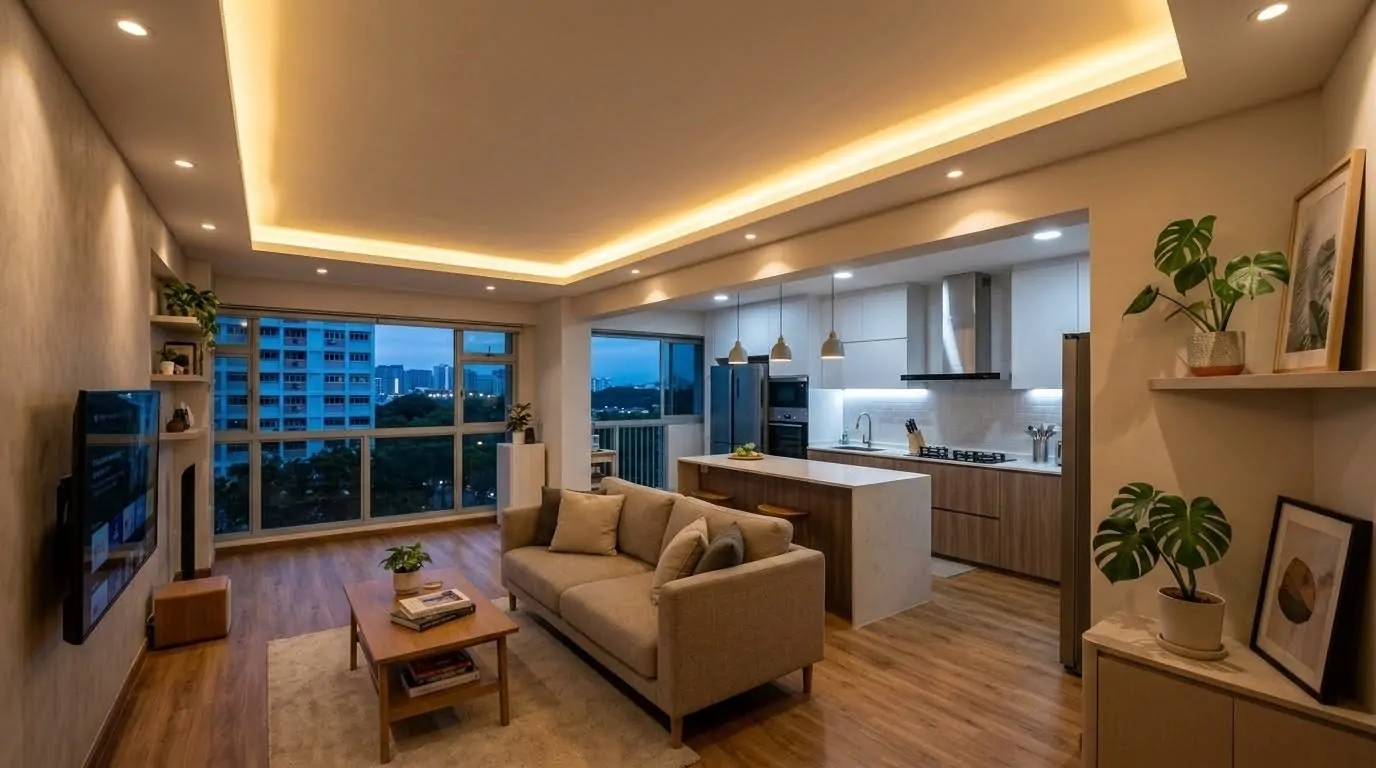
Choosing the right LED lighting for your Singapore home is one of the most impactful decisions you can make during a renovation — yet most homeowners only realise this after it is too late to change. Get it wrong and your rooms feel cold, dark, or clinically bright. Get it right and every space feels exactly how it should: warm and inviting in the bedroom, clear and energising in the kitchen, and focused in the study. This LED lighting Singapore guide covers everything you need to know — LED types, colour temperatures, CRI, energy savings, and a room-by-room buying checklist — so you can walk into any lighting store with confidence.
At Regal Lighting Gallery, we have been helping Singapore homeowners navigate these choices for over a decade. The questions we hear most often have not changed: What is the difference between a downlight and a panel light? What colour temperature should my bedroom be? Does a higher wattage always mean brighter? Read on and we will answer all of these — clearly and practically.
The Main Types of LED Lights for Singapore Homes
Understanding which LED format suits each room is the foundation of a well-lit home. Here is a breakdown of the most common types:
LED Downlights (Recessed Lights)
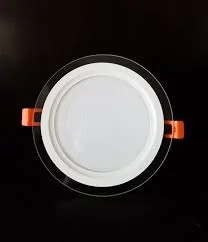
Downlights are the workhorse of Singapore HDB and condo lighting. They sit flush with the false ceiling and produce a clean, uncluttered look. Fixed downlights spread light evenly across a room, while adjustable versions let you direct the beam to highlight artwork, shelving, or kitchen countertops. For wet areas like bathrooms, always choose downlights with a minimum IP44 rating.
Our LED downlights from Megaman are a popular choice for homeowners who want flicker-free, long-lasting performance.
LED Panel Lights
Flat and uniform, LED panel lights are ideal for study rooms, home offices, and service areas where even, shadow-free illumination matters. They are energy-efficient and reduce eye strain — an important factor if you spend long hours at a desk.
LED Strip Lights
Strip lights are one of the most versatile tools in residential lighting. Use them under kitchen cabinets for task lighting, behind TV consoles for bias lighting that reduces screen glare, or along ceiling coves for ambient uplighting. Colour-changing RGB strips are available if you want the ability to shift mood by room or time of day.
Track Lighting
A power track system allows you to mount multiple adjustable spotlights along a single electrified rail — no additional wiring needed to reposition them. Track lighting is particularly effective in living rooms and dining areas where you want to highlight different features or adapt the lighting layout as your furniture changes.
LED Spotlights
Spotlights deliver concentrated, directional light with a narrow beam angle — typically 15 to 25 degrees for accent lighting and up to 40 degrees for general task lighting. They are excellent for feature walls, display cabinets, and kitchen counters.
Understanding Colour Temperature: The Most Important Choice You Will Make
Colour temperature is measured in Kelvin (K) and determines whether your light appears warm, neutral, or cool. In Singapore, most homeowners choose from three main ranges:
- 2700K to 3000K (Warm White): Creates a cosy, relaxed atmosphere. Best for bedrooms, living rooms, and dining areas where you want to wind down.
- 3500K to 4000K (Neutral White): Balanced and clean. Works well in kitchens, bathrooms, and home offices where clarity matters but harshness is unwanted.
- 5000K to 6500K (Cool White / Daylight): Crisp and alert-promoting. Suitable for study rooms, utility areas, and spaces where detailed tasks are performed.
A common mistake in Singapore homes is applying a single colour temperature throughout. The most comfortable and functional homes layer temperatures by room purpose — warmer near soft furnishings, cooler over work surfaces.
What Is CRI and Why Does It Matter?
CRI stands for Colour Rendering Index, a measurement from 0 to 100 that indicates how accurately a light source reveals the true colours of objects compared to natural daylight. A CRI of 80 is considered acceptable for general home use. A CRI of 90 or above is strongly recommended for spaces where colour accuracy matters — your wardrobe, the bathroom, and any artwork or feature wall you want to display faithfully. When comparing LED products, always check the CRI specification. Budget LEDs often scrimp here, leaving rooms feeling flat and colours looking dull even at the correct brightness.
Energy Savings: How Much Can You Actually Save?
Singapore’s tropical climate and long daylight hours mean air-conditioning dominates household energy bills — but lighting is a meaningful secondary cost. A standard incandescent bulb uses 60 watts to produce around 800 lumens. An equivalent LED downlight produces the same brightness at just 8 to 10 watts. Over a year, replacing 20 ceiling lights with LED equivalents can reduce your lighting energy consumption by up to 80%, according to the Energy Market Authority of Singapore.
Pairing LEDs with smart switches lets you automate schedules, dim lights when rooms are not in active use, and control everything remotely — making energy savings even more consistent without any lifestyle effort.
Room-by-Room LED Lighting Recommendations
| Room | Colour Temp | Fixtures | CRI |
|---|---|---|---|
| Bedroom (Master) | 2700K to 3000K | Downlights + bedside strip | 80+ |
| Living Room | 2700K to 3000K | Downlights + cove strip | 80+ |
| Kitchen | 3500K to 4000K | Downlights + under-cabinet strip | 90+ |
| Bathroom | 3500K to 4000K | IP44 downlights | 90+ |
| Study / Home Office | 4000K to 5000K | Panel light or downlights | 80+ |
| Dining Area | 2700K to 3000K | Pendant or spotlight | 80+ |
Frequently Asked Questions
Q: Is higher wattage always brighter?
A: No. Wattage measures power consumption, not brightness. Lumens measure brightness. Always compare lumens when selecting LEDs — a quality 8W LED can outperform a poorly manufactured 12W LED.
Q: How long do LED lights last in Singapore?
A: Quality LEDs typically last 25,000 to 50,000 hours. At 8 hours of daily use, that is 8 to 17 years — far exceeding fluorescent tubes and incandescents.
Q: Can I mix warm and cool white lights in the same home?
A: Yes, and many designers recommend it. The key is to be intentional — assign colour temperatures by room function rather than mixing them randomly within a single space.
Q: What is the difference between dimmable and non-dimmable LEDs?
A: Dimmable LEDs require a compatible dimmer switch. Non-dimmable LEDs will flicker or fail prematurely if connected to a dimmer. Always confirm compatibility before purchasing.
Q: Do I need to rewire my home to switch to LED?
A: In most cases, no. LED downlights replace existing fittings directly. Some older fluorescent fixtures may require a driver replacement — your lighting specialist can advise on-site.
Conclusion
LED lighting is not a one-size-fits-all purchase, and getting it right means understanding the interplay between light type, colour temperature, CRI, and your room’s function. Visit Regal Lighting Gallery at our Singapore showroom to see every LED type running live, compare colour temperatures side by side, and get personalised advice from our team. We stock a full range of residential LED solutions and can help you plan lighting for every room — from a single HDB bedroom to a full landed property renovation.
References
- Energy Market Authority of Singapore — Household Energy Consumption — https://www.ema.gov.sg
- Singapore Green Building Council — Energy Efficiency Standards — https://www.sgbc.sg
- International Commission on Illumination (CIE) — CRI Measurement Standards — https://cie.co.at