
Ceiling Fan FAQ
Ceiling fans are increasingly popular in Singapore’s households because of its hot and humid weather. Unlike traditional ceiling fans, ceiling fans these days comes in a variety of streamlined designs that are modern, sleek and functional.
With such a wide variety of ceiling fans available in the market, it can be overwhelming for buyers when come to buying a ceiling fan in Singapore. Before you purchase your ceiling fan, here are some helpful tips on how to choose a ceiling fan for your home:
Knowledge Base:
Wind Speed & Airflow
Wind speed and airflow are often the key considerations to choose a ceiling fan. The wind speed of the ceiling fan simply put, is how strong the wind or the intensity is felt when standing directly underneath or within the vicinity blade span of the ceiling fan. Wind speed or also called “Air Velocity” is often measured using an anemometer which generate results in MPH or in some cases meter per min. Generally, smaller ceiling fan tends to have a higher wind speed power than a bigger ceiling fan due to higher RPM of which the same model.
The airflow of the ceiling fan in technical terms, is the measurement of the amount of air in CFM (cubic foot per minute). The higher the CFM, the more airflow generated by the fan. Generally, the bigger the blade size, the higher the CFM as bigger fan generates more wind volume than smaller fan. A CFM between 5000 to 6000 is considered pretty good range, and anything above will be a bonus. When buying a ceiling fan online, it will be helpful to look at the RPM and CFM measurements.
Some of the factors that determines wind speed and airflow are the motor revolution (RPM), blade pitch angle and design, as well as the size and number / length of the blades. A good ceiling fan should have blades pitch (angle of blade) that complements the motor design to generate maximum efficiency and airflow. For example, curvy blades will generate a wider spread whereas another with flat blades may generate a more focus airflow.
- Motor Revolution per minute (RPM)
- Blade Pitch Angle and design
- Size and number / length of the blade
Revolution per minute (RPM) – Is the measurement of the rotational speed of the fan motor in one minute. This is to measures how fast the blades spins at a certain speed. Generally, a fan with higher RPM will generate higher wind speed.
Blade Pitch Angle and Design – The angle of the blades tilted determines the amount of air sweep when the blade spins. The design of the blade generally affects the wind character or performance (wider spread or focus) airflow.
Size and number / length of the blade – The size of the fan determines the coverage area and number of blades generates the wind. It is commonly thought that a 5 blades ceiling fan will generate more wind power than 3 blades, but this is not always the case, since it depends on the blade pitch and other factors. Some 3 blades ceiling fan can generate higher airflow/ wind speed than a 5 blades fan. However, if all factors are the same (blade, size & design), a 5 blades fan will generally generate higher air flow than a 3 blades fan.
How to choose your ceiling fan size:
1. Size of fan
While the size of the blades might give you a bigger airflow coverage area when it comes to ceiling fan, it is crucial that you picked the right size for optimum air flow. As a general rule of thumb, we recommended an clearance of at least 24 inch or 0.6m on each side of the ceiling fan, to ensure the fan operate at its optimum performance to generate maximum airflow. For example, if you living room measures 3 metres by 2.4 metres, take the measurement on the narrower side 2.4m and deduct 1.2m (0.6m * 2). The allowable space for your ceiling fan size is about 1.2m (approx. 47 inches) after taking the clearance in considerations. You can look for the size ranging from 44 – 47 inches in the market as long as the performance of the fan serves your requirement.
However, it is also important to consider other elements such as cove light, aircon unit, wardrobe, cornice, that maybe in place, and adjust the size accordingly. For small area, a ceiling fan is still possible with less allowance, but airflow will be reduced.
Following table is a general guide for fan size for standard Singapore’s homes:
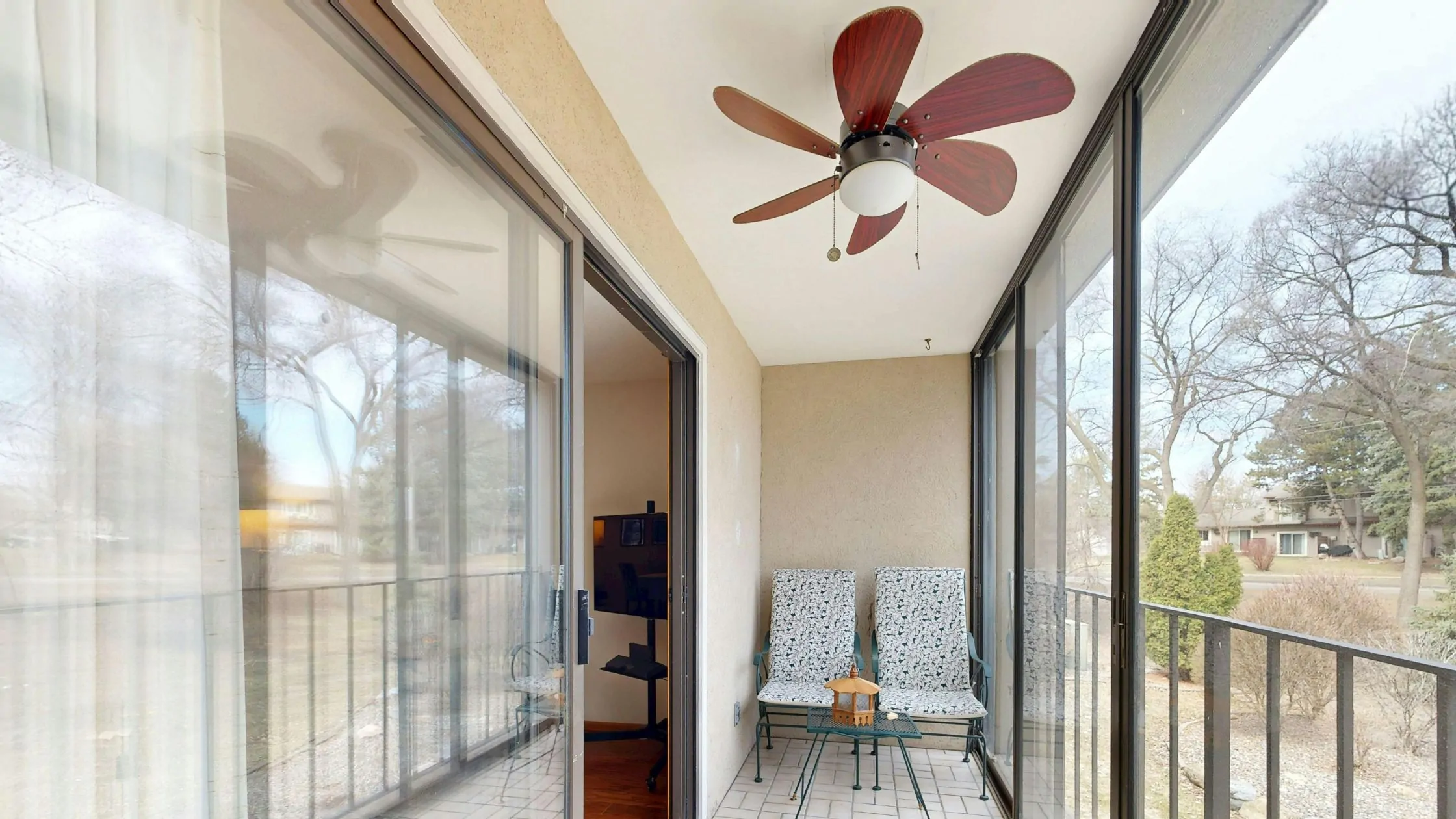
- Balcony: 32” to 42” (Please consider allowance for bind motors, if applicable)
- Standard Bedroom: 38” to 48” (Consider allowance for wardrobe, aircon unit)
- Large Bedroom: 46” to 56”
- Living: 44” to 60+” (Consider 2 ceiling fans for big spaces)
If you are not certain on your size requirements, our sales representative will be happy to recommend you a size based on your needs.
2. Height of fans
The average height of Singapore apartment is about 2.6 to 3 metres. Most of the average standard ceiling fan drop (from mounting to fan base) in the market is about 32 – 38cm, resulting an average allowance of 2.2– 2.7 metres from floor after installation. For apartment with lower ceiling height, we recommend ceiling fan with shorter neck or hugger design, to maximise the height allowance between the fan and floor for safety reason. For hugger design, you can consider these ceiling fan models from Point One and Alaska (fan drop approx. 26cm).
For apartment with higher ceiling than 3.2 metres, please request for down rod extension for optimum air flow. The calculation of the extension down rod can differ by fan models, please speak to our representatives to find out more.
3. Colours
Ceiling fans these days comes in a myriad of colours. Black, white, silver, wood and bronze are common choices; most of the ceiling fan blades these days comes in ABS (Acrylic) finishing for easy maintenance. Brands like Point One and Efenz allow you to mix and match the colours of the fan body and blades to create a customized look for your home.
4. Ceiling fan with / without Lights
Most ceiling fans in the market currently comes with the option of LED Tri-tone light kit and remote control, eliminating the option of additional lighting. These LED Tri-tone light kit comes with a minimum wattage of 18W to 36W. While 18W to 20W is generally sufficient for standard size bedroom, for brighter illumination, you may want to consider a minimum wattage of 20W. You can also consider supplementing your lighting source with other options such as cove light to create a soft ambience lighting when necessary.
5. Smart Wifi Function
Many Ceiling Fans are equipped with Smart Wifi function these days to allow app control from the phone, in addition to remote control. Check with the salesperson if this function is included or optional.
To view more selections of our bestselling ceiling fans, visit our online store to find out more. We also welcome you to our showroom to view the actual display unit, speak to our sales representatives and try out the fan before you decide which ceiling fan suits you best
Frequently Asked Questions (FAQ)
Q: Can a ceiling fan with lights replace my existing light point?
Yes, most installations use the existing ceiling light wiring. However, you may need additional wiring if you want separate wall switches for fan and light.
Q: Are ceiling fans with lights suitable for low HDB ceilings?
Yes, choose a low-profile or hugger model with housing height under 30cm. Point One , Fanco and Alaska offer such models.
Q: Where to buy ceiling fans with lights in Singapore?
Regal Lighting carries all brands mentioned. Visit their Sin Ming or Chai Chee showroom or order online at https://www.regallighting.com.sg/ceiling-fans/
Q: How Bright should the light be?
For a typical HDB bedroom (about 15–20 sqm), a ceiling fan with 18W–24W LED is sufficient. For a living room (25–35 sqm), you can consider to supplement with downlights / LED strip for added layer of lighting + ambience or choose extra bright lightkit like Tributo.
Q: What to look out for in remote control?
Most modern ceiling fans with lights include a remote control. Essential features to look for:
- Separate fan speed and light on/off buttons
- Light dimming function (for bedrooms)
- Memory function (remembers last settings)
- Timer function (auto-off after 1–8 hours)
Regal Lighting offers professional installation services upon request.
Citations & References
- Regal Lighting – Ceiling Fans in Singapore. (n.d.). Retrieved from https://www.regallighting.com.sg/ceiling-fans/
- Regal Lighting – Point One Ceiling Fan Collection. (n.d.). Retrieved from https://www.regallighting.com.sg/product-category/ceiling-fans/po-eco/
- HDB Renovation Guidelines – Ceiling Fan Installation. (2024). www.hdb.gov.sg
- Energy Market Authority – Energy Labeling for Household Fans. (2023). www.ema.gov.sg